


Study identifies eight novel coronavirus replication terminators
Posted: 6 July 2020 | Hannah Balfour (Drug Target Review) | No comments yet
Scientists reveal eight new molecules, five of which are already US FDA-approved, that can block the polymerase reaction SARS-CoV-2 uses to replicate its genome.
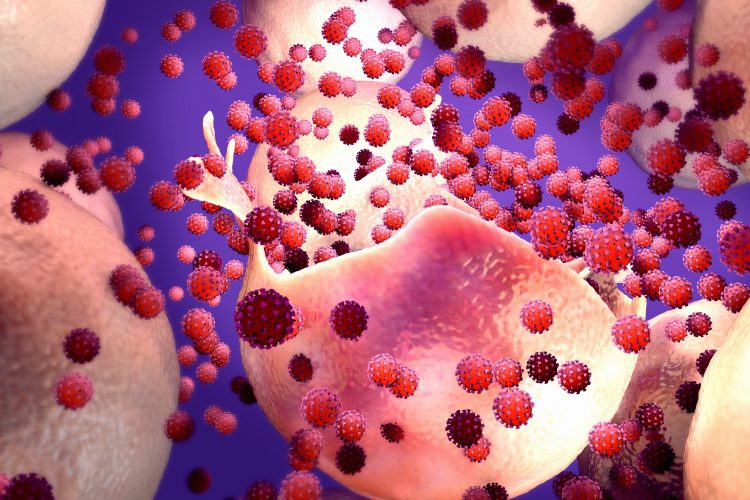
Researchers have identified eight molecules that can shut down the polymerase reaction used by COVID-19 to replicate its genome within human cells. Five of the compounds are already US Food and Drug Administration (FDA)-approved for human use.
With regular news updates and feature articles, our COVID-19 hub has everything you need to keep up to date with R&D during the pandemic. Click below to visit:
SARS-CoV-2, the coronavirus causing the COVID-19 pandemic, uses the polymerase protein to replicate its genome inside infected human cells. Terminating the polymerase reaction stops the growth of the coronavirus, leading to its eradication by the human host’s immune system.
Researchers at the Columbia University School of Engineering and Applied Science (Columbia Engineering) and the University of Wisconsin-Madison, both US, have identified a library of molecules that can terminate the polymerase reaction, these could be potential lead compounds for the development of COVID-19 therapeutics.
Drug Target Review has just announced the launch of its NEW and EXCLUSIVE report examining the evolution of AI and informatics in drug discovery and development.
In this 63 page in-depth report, experts and researchers explore the key benefits of AI and informatics processes, reveal where the challenges lie for the implementation of AI and how they see the use of these technologies streamlining workflows in the future.
Also featured are exclusive interviews with leading scientists from AstraZeneca, Auransa, PolarisQB and Chalmers University of Technology.
Initially, Columbia Engineering researchers reasoned that the active triphosphate of the hepatitis C drug sofosbuvir and its derivative could potentially inhibit the SARS-CoV-2 polymerase. This was based on an analysis of the molecular properties and the replication requirements of both the hepatitis C virus and coronaviruses.
In earlier experiments testing the properties of the coronavirus which causes Severe Acute Respiratory Syndrome (SARS), researchers found that the triphosphate of sofosbuvir was able to terminate the virus polymerase reaction. They then demonstrated that sofosbuvir and four other nucleotide analogues – the active triphosphate forms of the HIV inhibitors Alovudine, Zidovudine, Tenofovir alafenamide and Emtricitabine – also inhibited the SARS-CoV-2 polymerase with different levels of efficiency.
From these experiments, the team gained molecular insights which they then used to select 11 nucleotide analogue molecules with a variety of structural and chemical features that could be potential inhibitors of the polymerases of SARS-CoV and SARS-CoV-2. While all 11 molecules tested displayed incorporation, six exhibited immediate termination of the polymerase reaction, two showed delayed termination and three did not terminate the polymerase reaction.
Prodrug medications of five of the nucleotide analogues that terminated SARS-CoV-2 polymerase reaction are FDA-approved for use in treating other viral infections (including HIV/AIDS, cytomegalovirus and hepatitis B) and have well-established safety profiles: Cidofovir, Abacavir, Valganciclovir/Ganciclovir, Stavudine and Entecavir. The researchers suggest that once their potency for blocking SARS-CoV-2 replication has been established in cell cultures, these candidate molecules and their modified forms may be evaluated for the development of potential COVID-19 therapies.
Jingyue Ju, research leader, Samuel Ruben-Peter G. Viele Professor of Engineering, professor of chemical engineering and pharmacology, and director of the Center for Genome Technology & Biomolecular Engineering at Columbia University concluded: “In our efforts to help tackle this global emergency, we are very hopeful that the structural and chemical features of the molecules we identified, in correlation with their inhibitory activity to the SARS-CoV-2 polymerase, can be used as a guide to design and synthesise new compounds for the development of COVID-19 therapeutics.”
The study was published in Antiviral Research.
Related topics
Disease research, Drug Leads, Drug repurposing, Drug Targets, Hit-to-Lead, Immunology, Protein, Proteomics, Therapeutics
Related conditions
Coronavirus, Covid-19, Hepatitis B, Hepatitis C, HIV/AIDS, human cytomegalovirus (HCMV)
Related organisations
Columbia University School of Engineering and Applied Science, University of Wisconsin-Madison (UW-Madison)
Related people
Jingyue Ju
