


Antibodies stimulate microglia to degrade Alzheimer’s amyloid plaques
Posted: 11 March 2020 | Hannah Balfour (Drug Target Review) | No comments yet
A novel antibody has been shown to stimulate microglia to degrade amyloid plaques in a murine model of Alzheimer’s disease.
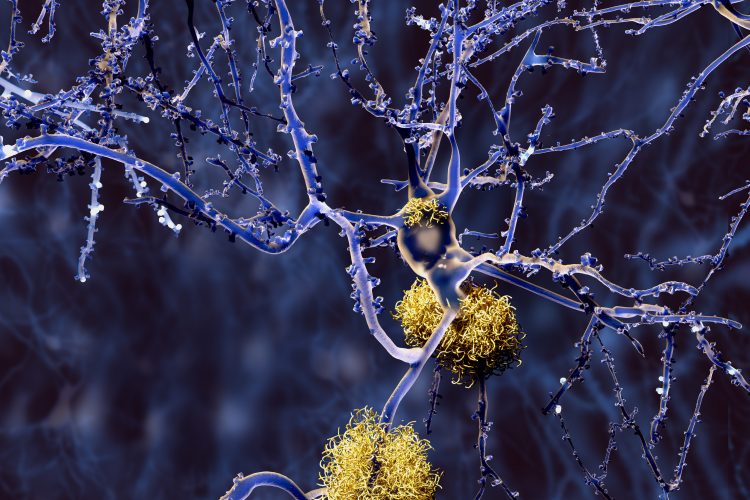
Researchers have identified and tested an antibody which can stimulate microglial cells to recognise and degrade the amyloid plaques seen in Alzheimer’s disease. The researchers hope their discovery could lead to novel therapeutics for neurodegenerative diseases.
German scientists have identified an antibody that binds to the TREM2 receptor on microglia, stimulating them to live longer, divide more quickly and detect aberrant substances more easily. The study, published in EMBO Molecular Medicine, details how murine models of Alzheimer’s treated with the TREM2 antibodies had their amyloid plaques degraded more quickly than their untreated, control counterparts.
“We found that the plaques were not removed in their entirety, but rather this happened to their periphery. It is assumed that it is precisely this border area that repeatedly releases proteins which cause damage to neurons. So we may have found a way to specifically remove particularly harmful forms of amyloid contained in the plaques,” said Professor Christian Haass, speaker at the German Center for Neurodegenerative Diseases’ (DZNE’s) Munich site and a department head of the Ludwig-Maximilians-Universitaet’s (LMU’s) Biomedical Center in Munich.
Drug Target Review has just announced the launch of its NEW and EXCLUSIVE report examining the evolution of AI and informatics in drug discovery and development.
In this 63 page in-depth report, experts and researchers explore the key benefits of AI and informatics processes, reveal where the challenges lie for the implementation of AI and how they see the use of these technologies streamlining workflows in the future.
Also featured are exclusive interviews with leading scientists from AstraZeneca, Auransa, PolarisQB and Chalmers University of Technology.
Haass and colleagues have been exploring the immune cells of the brain for years, with a focus on the TREM2 receptor. According to their research, there are different versions of TREM2 expressed by different people and some can drastically increase the risk of developing Alzheimer’s in old age.
Their previous studies show that the different variants can put microglia into an irreversible dormant state, where they fail to recognise, absorb and break down plaques and dead cells. Their new antibody could be used to reverse this, enhancing microglia activity and promoting plaque degradation. However, Haass cautioned that further studies are required prior to any clinical trials: “We have shown that immune cells can be stimulated to break down amyloid deposits more effectively. This demonstrates that our approach can work in principle. However, there is still a long way to go before it can be tested in humans and additional data is necessary to validate this approach.”
Related topics
Antibodies, Drug Development, Drug Discovery, Drug Targets, Genomics, microglial cells, Neuroprotection, Neurosciences, Protein, Protein Expression, Proteomics, Therapeutics
Related conditions
Alzheimer’s disease, Neurodegenerative diseases
Related organisations
German Center for Neurodegenerative Diseases (DZNE), Ludwig-Maximilians-Universitaet (LMU)
Related people
Professor Christian Haass
