

Potential SARS-CoV-2 antiviral to be tested in human lung cells
Posted: 24 May 2021 | Victoria Rees (Drug Target Review) | No comments yet
A synthetic antiviral named R327 has shown promise in initial tests against SARS-CoV-2 and is now advancing to the next stage of in vitro studies.
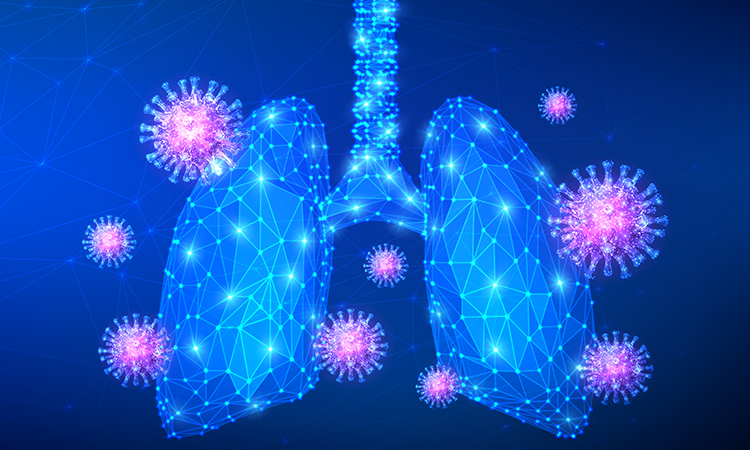
A lead synthetic anti-infective has progressed to the next stage of investigation, the SARS-CoV-2 antiviral screening programme at the Commonwealth Scientific and Industrial Research Organization (CSIRO), Australia.
With regular news updates and feature articles, our COVID-19 hub has everything you need to keep up to date with R&D during the pandemic. Click below to visit:
Developed by Recce Pharmaceuticals, the researchers say that the antiviral, named RECCE® 327 (R327), showed promise at the Doherty Institute, Australia, in initial Stage 1 tests.
“These encouraging results continue to reinforce our confidence in the potential of R327 against SARS-CoV-2 as another line of defence in the arsenal against COVID-19,” said non-executive chairman Dr John Prendergast. “We are keen to continue our work with CSIRO in Stage 2 of the Anti-Viral Screening Program.”
Drug Target Review has just announced the launch of its NEW and EXCLUSIVE report examining the evolution of AI and informatics in drug discovery and development.
In this 63 page in-depth report, experts and researchers explore the key benefits of AI and informatics processes, reveal where the challenges lie for the implementation of AI and how they see the use of these technologies streamlining workflows in the future.
Also featured are exclusive interviews with leading scientists from AstraZeneca, Auransa, PolarisQB and Chalmers University of Technology.
According to its developers, high concentrations of R327 (13,333 ppm and 40,000 ppm) showed a four-log reduction in SARS-CoV-2 viral genome numbers as measured by reverse transcription polymerase chain reaction (RT-PCR), but severe cellular toxicity was observed in vero cells at these concentrations. A half maximal cytotoxic concentration (CC50) of 5,108 ppm was calculated for R327.
R327 reduced SARS-CoV-2 viral genome copy numbers at 4,444 ppm and was accompanied by reduced infectious virus titres, allowing a half maximum inhibitory concentration (IC50) calculation of 2,046 ppm. At 4,444 ppm, R327 showed some toxicity, with a rounded cell morphology seen on microscopy.
R327 has been shown to be effective and not highly toxic at a small window of concentrations in the preliminary in vitro testing in vero cells and so received a qualified recommendation to proceed to Stage 2 of the programme for further testing in normal human bronchial epithelial (NHBE) cells grown at the air-liquid interface to be conducted by CSIRO, with anticipated results towards the end of the year.
According to Recce Pharmaceuticals, further testing must be completed in order to determine whether R327 will show an inhibitory effect against the SARS-CoV-2 virus without associated toxicity.
Related topics
Drug Development, Drug Leads, In Vitro, Therapeutics, toxicology
Related conditions
Covid-19
Related organisations
Commonwealth Scientific and Industrial Research Organisation (CSIRO), Doherty Institute, Recce Pharmaceuticals
Related people
Dr John Prendergast
