


D614G Spike mutation makes SARS-CoV-2 up to eight times more infectious
Posted: 18 February 2021 | Victoria Rees (Drug Target Review) | No comments yet
A study has shown the D614G mutation in the Spike protein of SARS-CoV-2 makes the coronavirus more transmissible than the original virus from China.
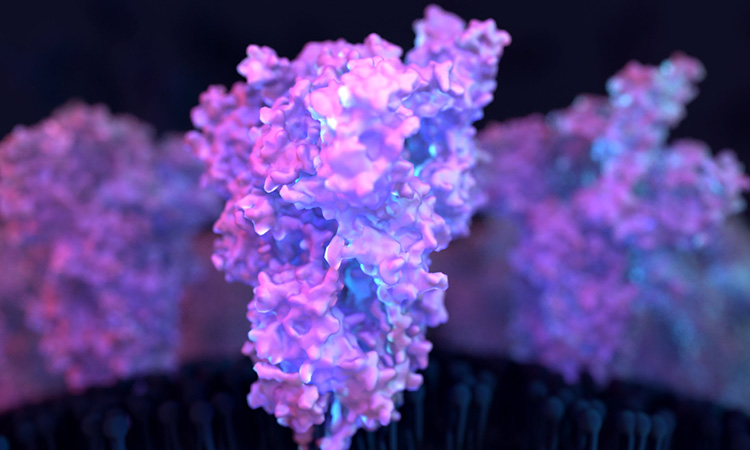
A mutation in the Spike (S) protein of SARS-CoV-2 – one of several genetic mutations in the concerning variants that have emerged in the UK, South Africa and Brazil – makes the virus up to eight times more infectious in human cells than the initial virus that originated in China, according to a new study.
With regular news updates and feature articles, our COVID-19 hub has everything you need to keep up to date with R&D during the pandemic. Click below to visit:
The study, led by researchers at New York University, the New York Genome Center and Mount Sinai, all US, corroborates findings that the D614G mutation makes SARS-CoV-2 more transmissible.
“In the months since we initially conducted this study, the importance of the D614G mutation has grown: the mutation has reached near universal prevalence and is included in all current variants of concern,” said Assistant Professor Neville Sanjana, one of the researchers of the study. “Confirming that the mutation leads to more transmissibility may help explain, in part, why the virus has spread so rapidly over the past year.”
Drug Target Review has just announced the launch of its NEW and EXCLUSIVE report examining the evolution of AI and informatics in drug discovery and development.
In this 63 page in-depth report, experts and researchers explore the key benefits of AI and informatics processes, reveal where the challenges lie for the implementation of AI and how they see the use of these technologies streamlining workflows in the future.
Also featured are exclusive interviews with leading scientists from AstraZeneca, Auransa, PolarisQB and Chalmers University of Technology.
The researchers introduced a virus with the D614G mutation into human lung, liver and colon cells. They also introduced the “wild type” version of the coronavirus – the version of the virus without the mutation found early on in the pandemic – into these same cell types for comparison.
They found that the D614G variant increased transduction of the virus up to eight-fold as compared to the original virus. The researchers also found that the S protein mutation made the virus more resistant to being cleaved or split by other proteins. This provides a possible mechanism for the variant’s increased ability to infect cells, as the hardier variant resulted in a greater proportion of intact S protein per virus.
“Going into this project we did not really know if D614G mutation would have any functional effects, as its wide spread could be due to a founder effect, where a variant becomes dominant because a small number of individuals spread it widely by chance. However, our experimental data was pretty unambiguous – the D614G variant infects human cells much more efficiently than the wild type,” said Zharko Daniloski, a postdoctoral fellow and the study’s co-first author.
However, the team highlight that it is still unclear whether the variant and its rapid spread have a clinical impact on COVID-19 disease progression, as several studies suggest that the D614G variant is not linked to more severe disease or hospitalisation.
The researchers note that findings on the increased transmissibility of the SARS-CoV-2 D614G variant may influence COVID-19 vaccine development and, in particular, it may be beneficial for future booster shots to include diverse forms of the S protein from different circulating variants.
“The research comprising this work is essential to understanding changes in biology that a given viral variant might demonstrate,” said co-senior author Professor Benjamin tenOever. “We are presently now moving forward with similar studies to study the variants that have arisen in the UK, Brazil and in South Africa”.
The research was published in eLife.
Related topics
Cell culture, Disease research, Protein, Proteomics
Related conditions
Covid-19
Related organisations
Mount Sinai, New York Genome Center, New York University
