

Researchers identify monoclonal antibody to neutralise COVID-19
Posted: 5 May 2020 | Victoria Rees (Drug Target Review) | 1 comment
An antibody that neutralises both SARS-CoV and SARS-CoV-2 in cell cultures has been discovered by researchers and could be used to treat COVID-19.
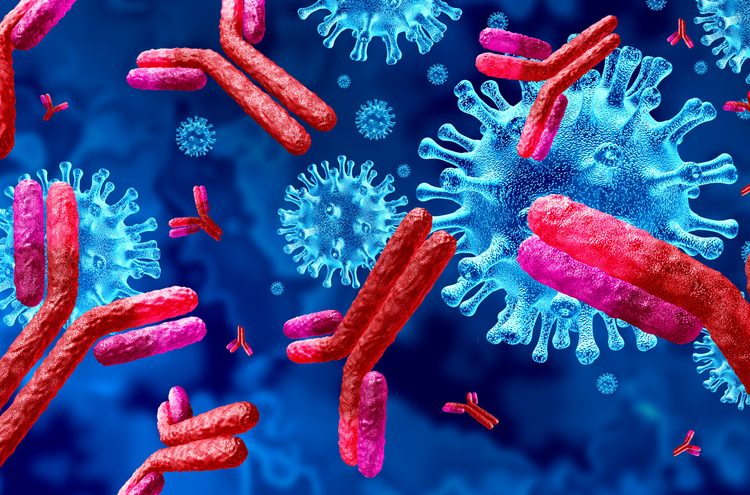
A fully human monclonal antibody (mAb) that prevents the SARS-CoV-2 virus from infecting cultured cells has been identified by researchers.
With regular news updates and feature articles, our COVID-19 hub has everything you need to keep up to date with R&D during the pandemic. Click below to visit:
From Utrecht University and Erasmus Medical Center in the Netherlands, along with Harbour BioMed (HBM), the researchers say this mAb could be used to treat or prevent the COVID-19 disease, caused by SARS-CoV-2.
“This research builds on the work our groups have done in the past on antibodies targeting the SARS-CoV that emerged in 2002/2003,” said Berend-Jan Bosch, Associate Professor and research leader at Utrecht University, as well as co-lead author. “Using this collection of SARS-CoV antibodies, we identified an antibody that also neutralises infection of SARS-CoV-2 in cultured cells. Such a neutralising antibody has potential to alter the course of infection in the infected host, support virus clearance or protect an uninfected individual that is exposed to the virus.”
Drug Target Review has just announced the launch of its NEW and EXCLUSIVE report examining the evolution of AI and informatics in drug discovery and development.
In this 63 page in-depth report, experts and researchers explore the key benefits of AI and informatics processes, reveal where the challenges lie for the implementation of AI and how they see the use of these technologies streamlining workflows in the future.
Also featured are exclusive interviews with leading scientists from AstraZeneca, Auransa, PolarisQB and Chalmers University of Technology.
Dr Bosch noted that the mAb binds to a domain conserved in both SARS-CoV and SARS-CoV-2, explaining its ability to neutralise both viruses. “This cross-neutralising feature of the antibody is very interesting and suggests it may have potential in mitigation of diseases caused by future-emerging related coronaviruses.”
“This discovery provides a strong foundation for additional research to characterise this antibody and begin development as a potential COVID-19 treatment,” said Dr Frank Grosveld, co-lead author on the study and Academy Professor of Cell Biology at the Erasmus Medical Center and Founding Chief Scientific Officer at HBM. “The antibody used in this work is ‘fully human’, allowing development to proceed more rapidly and reducing the potential for immune-related side effects.”
Conventional therapeutic antibodies are first developed in other species and then must undergo additional work to ‘humanise’ them. The antibody was generated using HBM’s H2L2 transgenic mouse technology.
“This is groundbreaking research,” said Dr Jingsong Wang, Founder and Chairman & Chief Executive Officer of HBM. “Much more work is needed to assess whether this antibody can protect or reduce the severity of disease in humans. We expect to advance development of the antibody with partners. We believe our technology can contribute to addressing this most urgent public health need and we are pursuing several other research avenues.”
The study was published in Nature Communications.
Related topics
Antibodies, Antibody Discovery, Drug Targets, Immunology, Research & Development, Therapeutics
Related conditions
Coronavirus, Covid-19, Severe Acute Respiratory Syndrome (SARS)
Related organisations
Erasmus Medical Center, Harbour BioMed (HBM), Utrecht University
Related people
Berend-Jan Bosch, Dr Frank Grosveld, Dr Jingsong Wang

isn’t it similar to RNA interference technique?