


Fundamental molecular research underpins our ability to combat COVD-19, says article
Posted: 23 April 2020 | Hannah Balfour (Drug Target Review) | No comments yet
Ali Shilatifard’s article explains how investment in institutes performing molecular research is essential, as it is the foundation for all attempts to combat COVID-19 and other future pandemics.
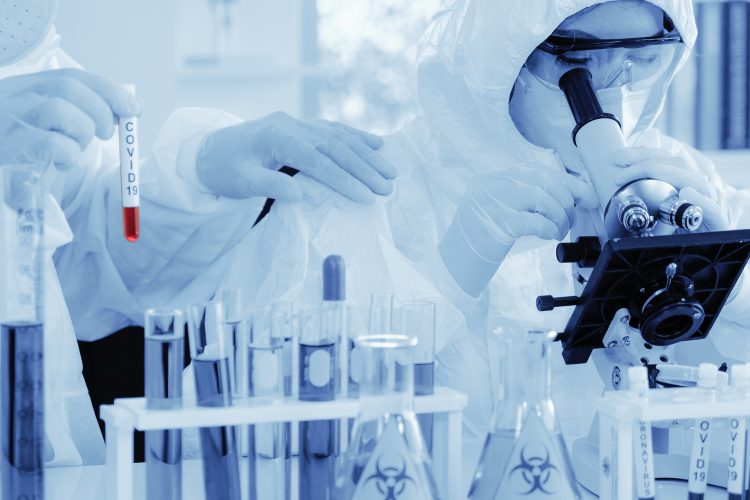
An article has highlighted the importance of government funding from organisations such as the US National Institutes of Health (NIH), National Cancer Institute (NCI) and their global counterparts by outlining how their historical R&D has contributed to the world’s response to the COVID-19 pandemic.
With regular news updates and feature articles, our COVID-19 hub has everything you need to keep up to date with R&D during the pandemic. Click below to visit:
According to Ali Shilatifard, Editor at Science Advances and author of the article published in Science Advances, fundamental molecular research plays an essential role in establishing the infectious processes of a novel pathogen and informing the development of therapeutic strategies and policy to respond to the infectious agent. In her article she highlights that as the world begins to overcome the effects of the COVID-19 pandemic, it is vital the policy-makers remember the role that molecular research played in this pandemic and its role in future ones, when allotting funding.
The SARS-CoV-2 genome and molecular research
Shilatifard stated that molecular research began to play a role in combatting COVID-19 when next-generation sequencing (NGS) was used to rapidly sequence the SARS-CoV-2 genome. The insights provided by this data, according to Shilatifard, enabled the development of an assay to detect COVID-19 in infected individuals. The assay uses reverse transcription followed by polymerase chain reaction (RT-PCR) and is a second example of how molecular research that has contributed to the pandemic.
Drug Target Review has just announced the launch of its NEW and EXCLUSIVE report examining the evolution of AI and informatics in drug discovery and development.
In this 63 page in-depth report, experts and researchers explore the key benefits of AI and informatics processes, reveal where the challenges lie for the implementation of AI and how they see the use of these technologies streamlining workflows in the future.
Also featured are exclusive interviews with leading scientists from AstraZeneca, Auransa, PolarisQB and Chalmers University of Technology.
However, while almost ubiquitous across the industry today, NGS was “unfathomable” only a few decades ago and its development was funded by grants from the NIH, NCI and other global research organisations. So was the enzyme required for PCR, despite the full process being established by private sector research, the enzymology and nucleic acid chemistry that contributed to PCR development was based on publicly funded molecular research.
Antivirals and other COVID-19 therapeutics
Antiviral drugs are required for mild and moderate cases of COVID-19, while other therapeutics are required to combat severe COVID-19 symptoms.
Shilatifard explained that both repurposing appropriate drugs and developing new ones also depends on “an in-depth understanding of molecular processes involved in the viral life cycle”. Taking the repurposing of remdesivir as an example of the former, she explained how it was first necessary for scientists to understand through molecular research that the SARS-CoV-2 virus causing COVID-19 was an RNA virus. As a result, it requires certain enzymes to infect and replicate in human cells, including an RNA-dependent RNA polymerase to convert its RNA genome into a double stranded structure similar to DNA that would then be able to hijack the replication machinery of the human host cell.
Remdesivir is an adenosine nucleotide analogue which, when added to a growing RNA strand, disrupts the action of the viral RNA-dependent RNA polymerase, preventing this essential step for viral replication. Clinical trials are ongoing and early results appear positive.
In order to treat the more severe COVID-19 symptoms, including cytokine storm which can cause respiratory failure, septic shock and in extreme cases, multi-organ failure, biochemical and molecular research was also required, said Shilatifard. One therapy she highlighted was interleukin-6 (IL-6) inhibitors to prevent the cytokine storm which causes tissue damage.
Molecular research and vaccine development
Shilatifard discussed that the overall aim of any treatment for viruses is for people to develop host and herd immunity, either through direct infection and recovery or through vaccination. For the latter, vaccines need to be able to be mass produced, distributed and administered globally.
She said that while traditional attenuated vaccines are effective, they have been too time-consuming and arduous to produce with the speed required by the spread of the COVID-19 pandemic. As such, researchers have turned to recombinant RNA and DNA vaccines, which are now in clinical trials.
Shilatifard explained that the developers of recombinant DNA technologies, Paul Berg, Walter Gilbert and Frederick Sanger and their colleagues, are therefore owed a debt of gratitude for their role in the development of vaccines for COVID-19.
In conclusion, Shilatifard stated that she hopes “lawmakers will recognise our society’s dependence on thorough, methodical, mechanistic science and the medicines it provides,” and they will be reminded to continue to invest in research institutes like the NIH and NCI that work to develop the field of fundamental molecular research, which she stated could be essential in developing strategies to combat future pandemics.
Related topics
Analytical techniques, Disease research, Drug Development, Drug Leads, Drug repurposing, Drug Targets, Genomics, Molecular Biology, Molecular Targets, Therapeutics, Vaccine
Related conditions
Coronavirus, Covid-19
Related organisations
National Cancer Institute (NCI), US National Institutes of Health (NIH)
Related people
Ali Shilatifard
