


Kinase identified as potential target for heart failure treatment
Posted: 1 November 2019 | Rachael Harper (Drug Target Review) | No comments yet
A new study has shown that restoring the amount of the kinase, HIPK2, in a kinase-depleted mouse model rescued it from heart failure and identifies HIPK2 as a novel regulator of heart failure progression.
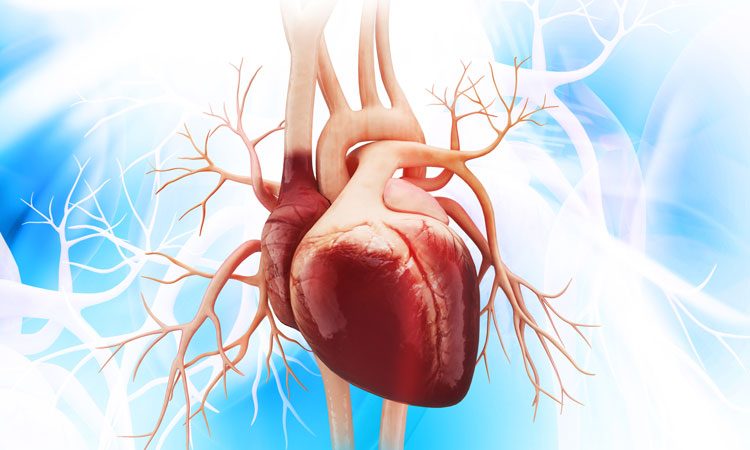
According to a new study, an unexplored kinase in heart muscle cells may be a successful target for the treatment of heart failure.
The study, led by University of Alabama at Birmingham, US researcher Hind Lal, PhD showed that human hearts had reduced amounts of the kinase HIPK2 and pre-clinical experiments showed that restoring the amount of HIPK2 in a kinase-depleted mouse model rescued the animal from heart failure.
“Our study identifies HIPK2 as a novel regulator of heart failure progression,” said Lal.
Drug Target Review has just announced the launch of its NEW and EXCLUSIVE report examining the evolution of AI and informatics in drug discovery and development.
In this 63 page in-depth report, experts and researchers explore the key benefits of AI and informatics processes, reveal where the challenges lie for the implementation of AI and how they see the use of these technologies streamlining workflows in the future.
Also featured are exclusive interviews with leading scientists from AstraZeneca, Auransa, PolarisQB and Chalmers University of Technology.
Regulator kinases like HIPK2 are the enzymes that can relay a signal from the surface of the cell to the cell nucleus, where the signal alters expression of genes in the chromosome.
We identified a potential modulator of heart failure – HIPK2, a kinase whose role in cardiac biology has never been studied before…”
To identify HIPK2 as a good candidate for study, Lal and colleagues first identified genes that were differentially expressed in failing mouse hearts and next used three different algorithms to postulate the transcription factors responsible for those expression changes. Finally, they linked those transcription factors with potential upstream kinase regulators.
“Among those candidates, we identified a potential modulator of heart failure – HIPK2, a kinase whose role in cardiac biology has never been studied before,” Lal said. “To determine the role of HIPK2 in failing human hearts, we examined the expression of HIPK2 in heart tissue from patients with end-stage ischemic cardiomyopathy. The expression of HIPK2 was dramatically decreased in failing hearts compared with normal human hearts.”
The major findings of the study (found in experiments with mouse models and rat heart-muscle cells) were that deletion of HIPK2 from heart muscle cells, known as cardiomyocytes, led to progressive deterioration of heart function with age. Younger mice had normal heart function.
At the molecular level, researchers showed that the HIPK2 deficiency caused enhanced programmed cell death, or apoptosis, of the cardiomyocytes in heart muscle. Mechanistically, the HIPK2 deficiency and apoptosis signalling acted via decreased ERK1/2 kinase phosphorylation.
Lal and colleagues speculate that cardiac-specific restoration of HIPK2 in failing human hearts may be a way to slow disease progression.
The study was published in the journal Circulation.
Related topics
Disease research, Drug Targets, Enzymes, Kinases, Research & Development, Targets
Related conditions
Heart failure
Related organisations
The University of Alabama at Birmingham
Related people
Hind Lal PhD
