


NIH researchers report first 3D structure of DHHC enzymes
Posted: 12 January 2018 | Drug Target Review | No comments yet
The 3D structure of DHHC proteins has been detailed for the first time, explaining how they function and potentially offering a blueprint for designing therapeutic drugs.
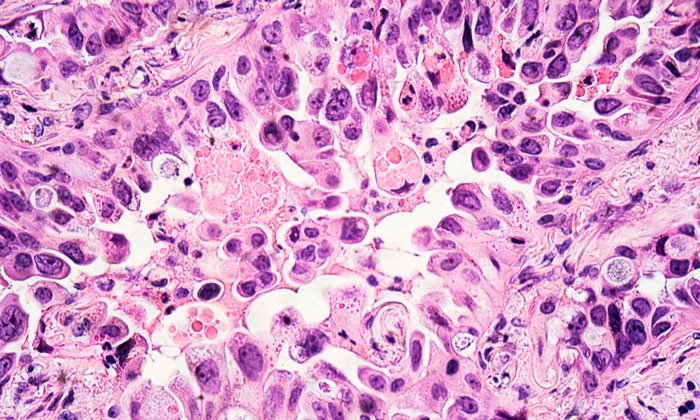
Researchers have proposed blocking DHHC activity to boost the effectiveness of first-line treatments against common forms of lung and breast cancer. However, there are currently no licensed drugs that target specific DHHC enzymes. The study, led by researchers at the Eunice Kennedy Shriver National Institute of Child Health and Human Development (NICHD), appears in the journal Science. NICHD is part of the National Institutes of Health.
DHHC enzymes, also called palmitoyltransferases, modify other proteins by attaching to them a chain of lipids, or fatty acids, of varying lengths. This modification, called palmitoylation, can change many properties of a target protein, such as its structure, function and location within a cell. Researchers estimate that nearly 1,000 human proteins undergo palmitoylation, including epidermal growth factor receptors (EGFRs). A well-known EGFR is HER2, which is overactivated in aggressive forms of breast cancer. EGFRs can also be overactivated in colon cancer, and non-small cell lung cancer, the most common type of lung cancer.
The current study details the structures of a human DHHC enzyme, DHHC20, and the zebrafish version of another DHHC enzyme, DHHC15. Importantly, DHHC20 is the enzyme that palmitoylates EGFR. Previous studies have shown that blocking DHHC20 makes cancer cells more vulnerable to existing FDA-approved treatments that target EGFR. Therefore, understanding the structure of DHHC20 may be important for treating EGFR-driven cancers.
Drug Target Review has just announced the launch of its NEW and EXCLUSIVE report examining the evolution of AI and informatics in drug discovery and development.
In this 63 page in-depth report, experts and researchers explore the key benefits of AI and informatics processes, reveal where the challenges lie for the implementation of AI and how they see the use of these technologies streamlining workflows in the future.
Also featured are exclusive interviews with leading scientists from AstraZeneca, Auransa, PolarisQB and Chalmers University of Technology.
Dr. Banerjee and colleagues identified a structural component, a cavity, of DHHC20 that influences the length of its lipid chain. Mutations that altered the relative size of this cavity caused DHHC20 to use shorter or longer lipid chains, which presumably changes the effects of palmitoylation on a target protein. The researchers propose that the structure of this site explains why different DHHC enzymes use certain lipid chains to modify the functions of other proteins. It also offers insight on how multiple enzymes work together in states of health and disease.
Related topics
Biomarkers, Molecular Biology, Protein
Related conditions
Cancer
Related organisations
Eunice Kennedy Shriver National Institute of Child Health and Human Development, National Institutes of Health (NIH)
Related people
Anirban Banerjee
