

Avenue discovered for precision cancer treatment
Posted: 2 August 2017 | Dr Zara Kassam (Drug Target Review) | No comments yet
A novel chemical dubbed “T-REX,” along with a patent-pending targeting molecule have uncovered interesting facets of several well-known cancer-cell mutations that, if present in a patient, could inform treatment options and potentially produce more favourable outcomes…
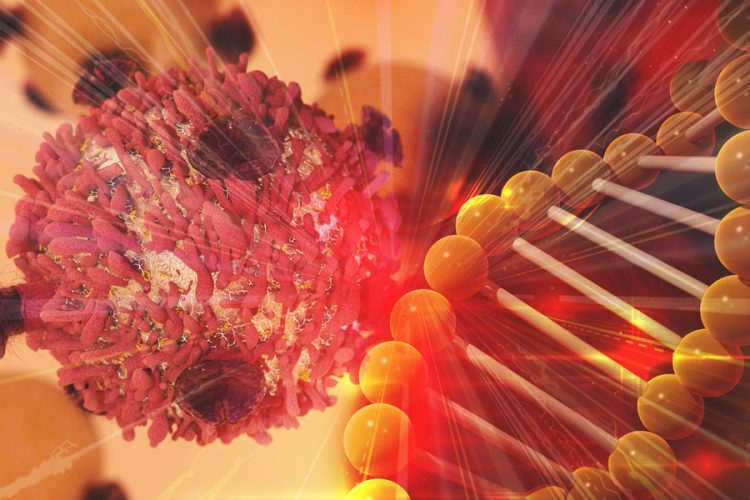
A novel chemical dubbed “T-REX,” along with a patent-pending targeting molecule have uncovered interesting facets of several well-known cancer-cell mutations that, if present in a patient, could inform treatment options and potentially produce more favourable outcomes.
“People wonder why certain drugs are more efficient in one individual over another,” said Yimon Aye, a Milstein Sesquicentennial Fellow in the College of Arts and Sciences who also has a joint appointment in the Department of Biochemistry at Weill Cornell Medicine. “Our discovery gives us a foundation to think about and design inhibitors that will … be much more effective in the patients carrying certain mutations.”
One challenge is that multiple variations, or isoforms, of the same protein can all catalyse the same cellular function, “but the nuances of biology rest in how individual isoforms are regulated,” said Prof Aye.
Researchers hope to determine which signals are affecting the response of a particular protein, the group used its T-REX procedure coupled with a widely used strategy to deplete the cell of a specific protein of interest. One challenge is that multiple variations, or isoforms, of the same protein can all catalyse the same cellular function. “but the nuances of biology rest in how individual isoforms are regulated,” Prof Aye said.
Drug Target Review has just announced the launch of its NEW and EXCLUSIVE report examining the evolution of AI and informatics in drug discovery and development.
In this 63 page in-depth report, experts and researchers explore the key benefits of AI and informatics processes, reveal where the challenges lie for the implementation of AI and how they see the use of these technologies streamlining workflows in the future.
Also featured are exclusive interviews with leading scientists from AstraZeneca, Auransa, PolarisQB and Chalmers University of Technology.
The group’s first key finding, the “cross-talk,” or interaction back and forth, between cell signalling pathways is regulated depending on the concentration of a certain transcription factor (Nrf2), a fact that isn’t clear unless you are able to selectively stimulate Nrf2 signalling, a method Prof Aye pioneered.
The second, and perhaps more interesting in terms of disease, a key mutation of cancer cells on the N-terminus — the start of a protein chain, which often contains key signalling information — would make them more susceptible to certain targeted therapeutics than those without the mutation.
“What we’ve discovered as a strategy is a means to target this pathway in the cancer cells that carry selective mutations on this domain [the N terminus],” Prof Aye said. “Potentially, patients can be genotyped to see if they carry these mutations, and they should respond much better to small molecules that activate antioxidant response.”
Prof Aye said understanding the many complexities of oncogenesis and cell signalling is crucial to developing better therapies for cancer and other diseases. “We could design much more selective therapeutics by understanding the underlying cross-talk,” she said.
One of the goals of personalised medicine is to be able to determine which treatment would work best by sequencing a patient’s genome.
Related topics
Drug Targets, Immunooncology, Molecular Targets, Oncodesign, Oncology
Related conditions
Cancer
Related organisations
Aye lab, College of Arts and Sciences, Weill Cornell Medicine
Related people
Yimon Aye
