


whitepaper
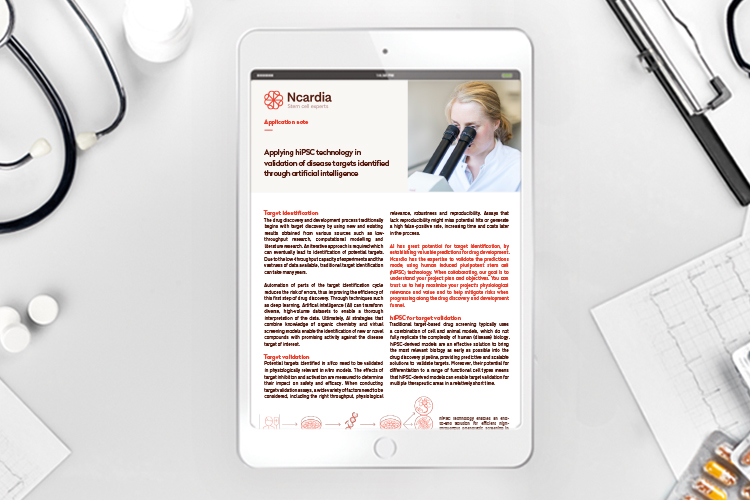
Application note: Validation of identified through AI
Targets for drug discovery can be identified with AI but require validation in vitro. Here’s how this can be done, using hiPSC technology.
List view / Grid view
Targets for drug discovery can be identified with AI but require validation in vitro. Here’s how this can be done, using hiPSC technology.
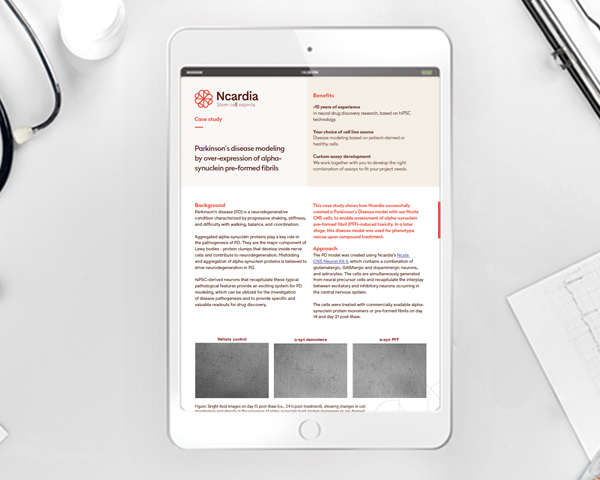
The development of a Parkinson’s disease model, using hiPSC-derived neural cells, to assess alpha-synuclein pre-formed fibril-induced toxicity.
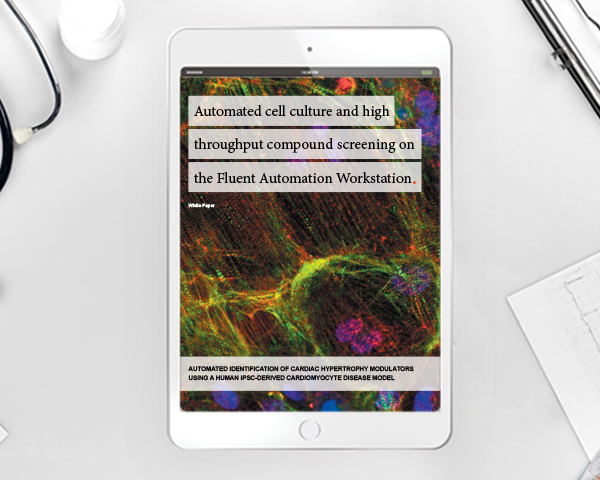
This whitepaper describes the automated culturing of hiPSC-derived cells for high-throughput phenotypic screening, using validated phenotypic assays.

Mass production with iPSCs: how Ncardia has pushed the boundaries with high-throughput iPSC research.
Neuroinflammation study by combining human iPSC-derived astrocytes and HTRF.
Controlled manufacturing of hiPSC-derived cardiomyocytes in stirred-tank bioreactors enabling high-throughput phenotypic screening.
This Ncardia company presentation will explain how human stem cell technology offers a solution for drug screening as well as cell therapy projects.



The high-throughput screening (HTS) facility at the Francis Crick Institute in the UK provides a core service for Crick research groups. It enables scientists to use large-scale, unbiased screening technologies and approaches as part of their research. Nikki Withers spoke to the Science Technology Platform Head, Michael Howell, to hear…


High-throughput screening is a common method of identifying lead compounds for drug development. The most common targets are enzymes – catalytic proteins that perform chemical reactions in the cell. In this article, Matthew Lloyd discusses the opportunities and challenges associated with this approach.

Exploring large databases and selecting compounds of interest can be extremely time-consuming for researchers. Here, Sacha Javor, Horst Flotow and Jingwen Shi discuss a novel chemoinformatics approach for drug discovery.
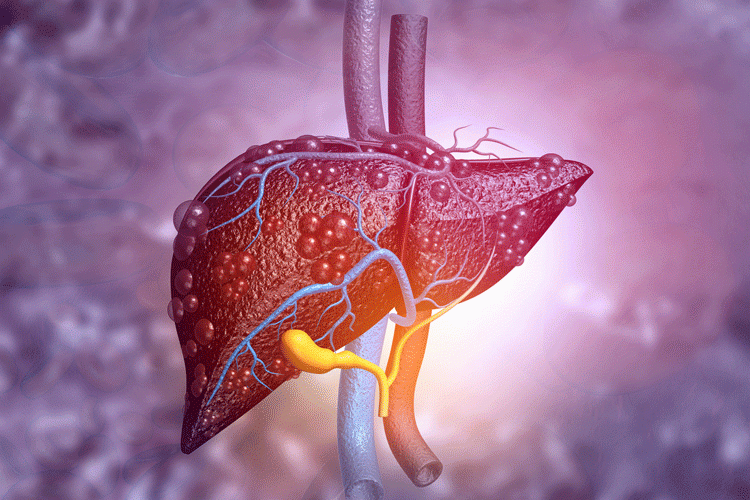
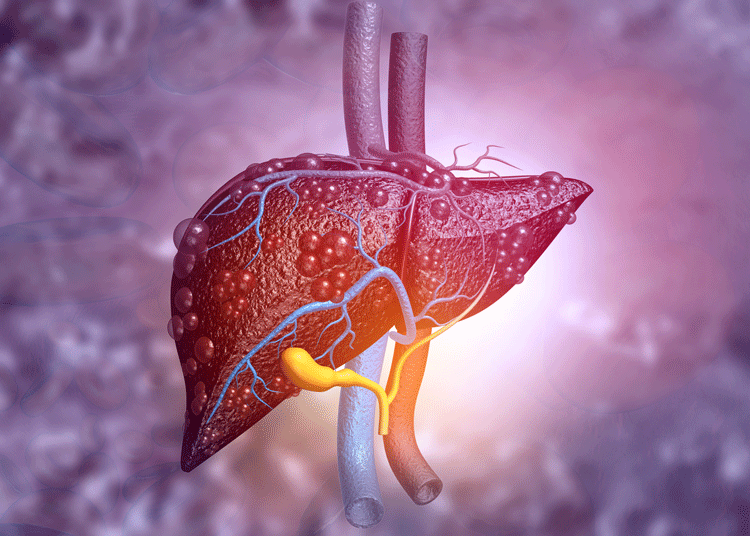
The heterogeneous pathogenesis of metabolic fatty liver diseases presents researchers with numerous challenges when trying to develop a treatment. This article explores the spectrum of these diseases and presents a novel in vitro platform for screening drug candidates.

Effective drug discovery and development greatly relies on the availability of predictive pre-clinical models.

Included in this in-depth focus are articles on how high-throughput screening can be used to identify lead compounds, using chemoinformatics as a map to guide drug discovery and a novel in vitro model to screen potential treatments for non-alcoholic fatty liver disease (NAFLD).
18 February 2019 | By Tecan and Ncardia
Ncardia, will discuss the application of human iPSC-derived cell-based assays and high throughput screening for drug discovery and development.
