


Empty Hepatitis E virus shells used to carry vaccines
Posted: 4 February 2016 | Victoria White | No comments yet
Researchers showed that virus-like particles carrying LXY-30 could home in on breast cancer cells both in a laboratory dish and in a mouse model…
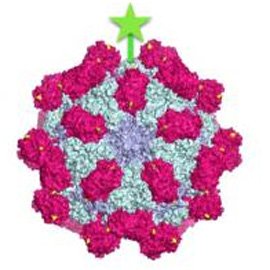
Researchers from UC Davis have developed a way to use the empty shell of a Hepatitis E virus to carry vaccines or drugs into the body.
The technique has been tested in rodents as a way to target breast cancer.
Hepatitis E virus is feco-orally transmitted, so it can survive passing through the digestive system, said Marie Stark, a graduate student working with Professor Holland Cheng in the UC Davis Department of Molecular and Cell Biology.
Drug Target Review has just announced the launch of its NEW and EXCLUSIVE report examining the evolution of AI and informatics in drug discovery and development.
In this 63 page in-depth report, experts and researchers explore the key benefits of AI and informatics processes, reveal where the challenges lie for the implementation of AI and how they see the use of these technologies streamlining workflows in the future.
Also featured are exclusive interviews with leading scientists from AstraZeneca, Auransa, PolarisQB and Chalmers University of Technology.
The researchers prepared virus-like particles based on Hepatitis E proteins. The particles do not contain any virus DNA, so they can’t multiply and spread and cause infections. Such particles could be used as vaccines that are delivered through food or drink. The idea is that you would drink the vaccine, and after passing through the stomach the virus-like particles would get absorbed in the intestine and deliver vaccines to the body.
But the particles could also be used to attack cancer. Stark and Cheng did some tinkering with the proteins, so that they carry sticky cysteine amino acids on the outside. They could then chemically link other molecules to these cysteine groups.
They worked with a molecule called LXY-30 which is known to stick to breast cancer cells. By using a fluorescent marker, they could show that virus-like particles carrying LXY-30 could home in on breast cancer cells both in a laboratory dish and in a mouse model of breast cancer.
Related topics
Drug Delivery
Related organisations
UC Davis
