


Zaki syndrome: the newly uncovered condition and its potential cure
Posted: 1 October 2021 | Anna Begley (Drug Target Review) | No comments yet
Dubbed ‘Zaki syndrome’, the condition affects prenatal development of several organs and was identified using whole genome sequencing.
Researchers at the University of California (UC) San Diego and Rady Children’s Institute for Genomic Medicine, both US, have described a previously unknown genetic condition that affects children, and identified a potential method to prevent the gene mutation by administering a drug during pregnancy.
The study, published in NEJM, involved researchers in Egypt, India, the United Arab Emirates, Brazil and the US. “Although different doctors were caring for these children, all of the children showed the same symptoms and all had DNA mutations in the same gene,” explained senior author Joseph Gleeson.
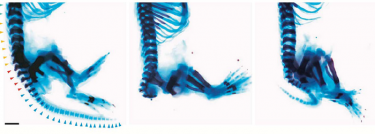
Images depict effects of Zaki syndrome and treatment with drug CHIR99021. Left: a normal mouse skeleton with legs and tail. Centre: a mouse carrying the gene mutation with tail missing. Right: mouse with mutation treated with drug, displaying re-grown tail.
[credit: Joseph Gleeson, UC San Diego]
The team dubbed the condition “Zaki syndrome” after co-author Maha Zaki of the National Research Center, Egypt, who first spotted the condition. Zaki syndrome affects prenatal development of several organs of the body, including eyes, brain, hands, kidneys and heart. As a result, children suffer from lifelong disabilities. The condition appears to be rare, but future studies are required to determine prevalence.
Drug Target Review has just announced the launch of its NEW and EXCLUSIVE report examining the evolution of AI and informatics in drug discovery and development.
In this 63 page in-depth report, experts and researchers explore the key benefits of AI and informatics processes, reveal where the challenges lie for the implementation of AI and how they see the use of these technologies streamlining workflows in the future.
Also featured are exclusive interviews with leading scientists from AstraZeneca, Auransa, PolarisQB and Chalmers University of Technology.
“We have been perplexed by children with this condition for many years,” continued Gleeson. “We had observed children around the world with DNA mutations in the Wnt-less (WLS) gene, but did not recognise that they all had the same disease until doctors compared clinical notes. We realised we were dealing with a new syndrome that can be recognised by clinicians, and potentially prevented.”
Using whole genome sequencing, researchers documented mutations in the WLS gene, which controls signalling levels for a hormone-like protein known as Wnt. Wnt signalling is a highly conserved group of protein pathways involved in embryonic development.
The scientists generated stem cells and mouse models for Zaki syndrome, and treated the condition with a drug called CHIR99021, which boosts Wnt signalling. In each mouse model, they found CHIR99021 boosted Wnt signals and restored development. Remarkably, mouse embryos grew body parts that had been missing and organs resumed normal growth.
NEW ARTICLE:
CRISPR-Cas9-based gene dropout screens: a powerful platform for drug discovery READ HERE
“The results were very surprising because it was assumed that structural birth defects like Zaki syndrome could not be prevented with a drug,” added first author Guoliang Chai. “We can see this drug, or drugs like it, eventually being used to prevent birth defects, if the babies can be diagnosed early enough.”
Related topics
DNA, Drug Leads, Genetic analysis, Genome editing, Genomics, In Vivo, Sequencing, Small Molecules, Therapeutics
Related conditions
Zaki syndrome
Related organisations
Rady Children’s Institute for Genomic Medicine, UC San Diego
Related people
Guoliang Chai, Joseph Gleeson, Maha Zaki
