


Artificial intelligence may reveal how microbiome affects vaccine response
Posted: 6 August 2021 | Anna Begley (Drug Target Review) | No comments yet
Researchers have been using artificial intelligence to study how the microbiome interacts with the human system to improve vaccine response.
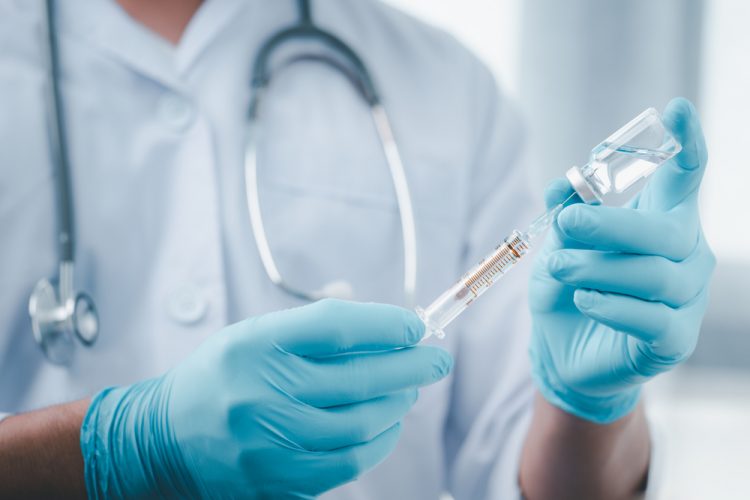
A team of researchers at Iowa State University, US, are employing innovative artificial intelligence (AI) to investigate how the microbiome interacts with the immune system. The team, led by Dr Gregory Phillips, said that they are focusing on gut bacteria that have adapted to live in the human digestive system to improve vaccine response.
With regular news updates and feature articles, our COVID-19 hub has everything you need to keep up to date with R&D during the pandemic. Click below to visit:
We want to go beyond associations to get causes, something in the microbiota that influences the host whereby vaccines can be improved”
The team are leading trials in mice monitoring changes in microbiota spurred by vaccine delivery and immune response. As the interactions they will be observing are so complex, the team have collaborated with Indiana University, US, to apply machine learning to find patterns in vast amounts of data. The aim is to find definitive relationships between the microbiome and immune response by the end of the study. “As scientists, we want to find cause and effect,” said Phillips. “We want to go beyond associations to get causes, something in the microbiota that influences the host whereby vaccines can be improved.”
The researchers have also teamed with the ISU Navovaccine Institute, a consortium of 75 researchers at 23 institutions, that fosters partnerships among researchers from different disciplines. In this study, they hope to bridge the gap between biology and AI.
Drug Target Review has just announced the launch of its NEW and EXCLUSIVE report examining the evolution of AI and informatics in drug discovery and development.
In this 63 page in-depth report, experts and researchers explore the key benefits of AI and informatics processes, reveal where the challenges lie for the implementation of AI and how they see the use of these technologies streamlining workflows in the future.
Also featured are exclusive interviews with leading scientists from AstraZeneca, Auransa, PolarisQB and Chalmers University of Technology.
The US Department of Defensive is funding the research as it is hoped that improved vaccine response will help military personnel stay healthy during their missions, through which they may encounter a wide range of viruses and pathogens. However, Phillips highlighted that the research has implications beyond military applications. According to the team, the next step is to test vaccines that target the Spike protein (S) of the SARS-CoV-2 virus to gauge whether changes in the microbiome can improve responses to COVID-19.
More information can be found here.
Related topics
Artificial Intelligence, Big Data, Funding, Immunogenicity, Immunology, Informatics, Microbiology, Microbiome, Vaccine
Related conditions
Covid-19
Related organisations
Indiana University, Iowa State University
Related people
Dr Gregory Phillips
