


New “atlas” charts how antibodies attack COVID-19 Spike variants
Posted: 26 July 2021 | Anna Begley (Drug Target Review) | No comments yet
A new “atlas” has been created in the US that charts how 152 different antibodies attack the SARS-CoV-2 Spike protein.
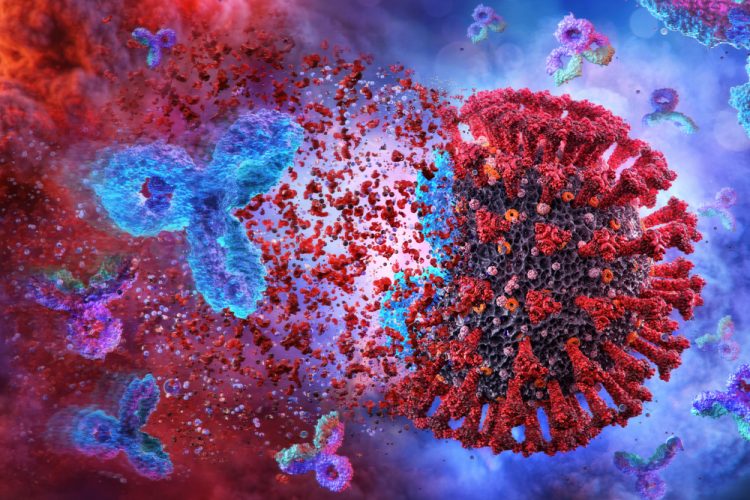
A team of researchers at the Brigham and Women’s Hospital, US, have created a new “atlas” that shows how 152 antibodies attack the SARS-CoV-2 Spike (S) protein as it has evolved since 2020. The study also highlighted ones that are able to neutralise newer SARS-CoV-2 strains while identifying regions of the S protein that have become more resistant to attack. According to the team, this approach could help to inform strategies for broadly protective COVID-19 booster vaccines.
With regular news updates and feature articles, our COVID-19 hub has everything you need to keep up to date with R&D during the pandemic. Click below to visit:
“Emerging data shows that vaccines still confer some protections from new SARS-CoV-2 variants, and our study shows how that works from an antibody standpoint,” said corresponding author Duane Wesemann. “This data can help us think about what the best kind of booster vaccine might be by studying how the repertoire of human antibodies recognises the S protein.”
The team examined the antibody-producing memory B cells of 19 patients who were infected with SARS-CoV-2 in March of 2020, before the emergence of new variants. They then studied how these antibodies bind to S protein models of the B.1.1.7 (Alpha), B.1351 (Beta) and P.1 (Gamma) variants of SARS-CoV-2. The authors confirmed that the hundreds of antibodies they studied largely bind to seven major “footprints” on the S protein. Moreover, while many of these antibodies competed to bind to the same regions of the early version of the SARS-CoV-2 S protein, some of them lost their potency against newer strains. Meanwhile, others emerged as broadly responsive neutralisers.
Drug Target Review has just announced the launch of its NEW and EXCLUSIVE report examining the evolution of AI and informatics in drug discovery and development.
In this 63 page in-depth report, experts and researchers explore the key benefits of AI and informatics processes, reveal where the challenges lie for the implementation of AI and how they see the use of these technologies streamlining workflows in the future.
Also featured are exclusive interviews with leading scientists from AstraZeneca, Auransa, PolarisQB and Chalmers University of Technology.
“Making different antibodies that compete for one region of the virus allows the immune system to be more flexible,” Wesemann added. “Otherwise-redundant recognition by antibodies targeting the same footprint of one version of the virus confers recognition depth of the same footprint on variants, and some antibodies maintain high neutralisation potency against all the variants. Now that we can identify the antibodies that are more broadly reactive to all of the variants, we can think about how to elicit them more strongly in a vaccine.”
The study was published in Cell.
Related topics
Antibodies, Molecular Targets, Protein, Proteomics, Vaccine
Related conditions
Covid-19
Related organisations
Brigham and Women’s Hospital at Harvard Medical School
Related people
Duane Wesemann
