

TEMPOL drug shows promise as antiviral treatment for COVID-19
Posted: 8 June 2021 | Victoria Rees (Drug Target Review) | No comments yet
The experimental drug TEMPOL has demonstrated antiviral activity against COVID-19 in a pre-clinical study in cell cultures.
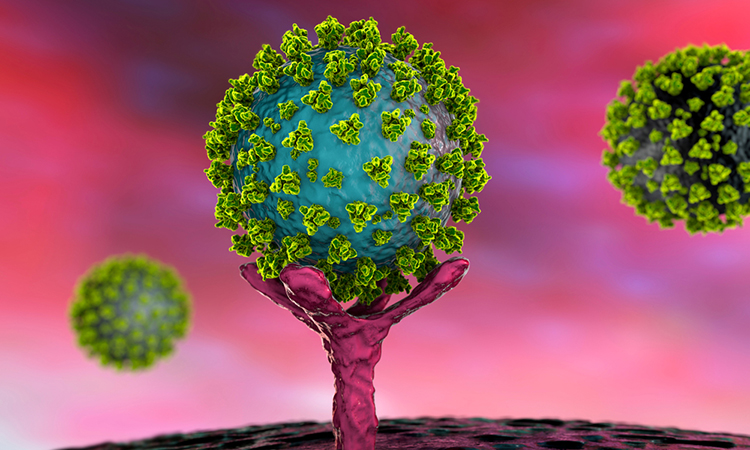
The experimental drug TEMPOL may be a promising oral antiviral treatment for COVID-19, a study in cell cultures has suggested. The research was conducted at the Eunice Kennedy Shriver National Institute of Child Health and Human Development (NICHD), a part of the US National Institutes of Health (NIH).
With regular news updates and feature articles, our COVID-19 hub has everything you need to keep up to date with R&D during the pandemic. Click below to visit:
According to the scientists, TEMPOL can limit SARS-CoV-2 infection by impairing the activity of a viral enzyme called RNA replicase.
“We urgently need additional effective, accessible treatments for COVID-19,” said Dr Diana Bianchi, NICHD Director. “An oral drug that prevents SARS-CoV-2 from replicating would be an important tool for reducing the severity of the disease.”
Drug Target Review has just announced the launch of its NEW and EXCLUSIVE report examining the evolution of AI and informatics in drug discovery and development.
In this 63 page in-depth report, experts and researchers explore the key benefits of AI and informatics processes, reveal where the challenges lie for the implementation of AI and how they see the use of these technologies streamlining workflows in the future.
Also featured are exclusive interviews with leading scientists from AstraZeneca, Auransa, PolarisQB and Chalmers University of Technology.
The team discovered TEMPOL’s effectiveness by evaluating a more basic question on how the virus uses its RNA replicase, an enzyme that allows SARS-CoV-2 to replicate its genome and make copies of itself once inside a cell.
The researchers tested whether the RNA replicase (specifically the enzyme’s nsp12 subunit) requires iron-sulphur clusters for structural support. Their findings indicate that the SARS-CoV-2 RNA replicase requires two iron-sulphur clusters to function optimally. Earlier studies had mistakenly identified these iron-sulphur cluster binding sites for zinc-binding sites, likely because iron-sulphur clusters degrade easily under standard experimental conditions.
Identifying this characteristic of the RNA replicase enabled the researchers to exploit a weakness in the virus. TEMPOL can degrade iron-sulphur clusters and previous research has shown the drug may be effective in other diseases that involve iron-sulphur clusters. In cell culture experiments with live SARS-CoV-2 virus, the team found that the drug can inhibit viral replication.
Based on previous animal studies of TEMPOL in other diseases, the study authors noted that the TEMPOL doses used in their antiviral experiments could likely be achieved in tissues that are primary targets for the virus, such as the salivary glands and the lungs.
The researchers plan on conducting additional animal studies and will seek opportunities to evaluate TEMPOL in a clinical study of COVID-19.
The study is published in Science.
Related topics
Cell culture, Drug Development, Drug Leads, Target Validation
Related conditions
Covid-19
Related organisations
Eunice Kennedy Shriver National Institute of Child Health and Human Development (NICHD), US National Institutes of Health (NIH)
Related people
Dr Diana Bianchi
