


Assay developed to detect cathepsin B in blood samples
Posted: 19 April 2021 | Victoria Rees (Drug Target Review) | No comments yet
Scientists have created an assay to detect the protein cathepsin B in blood, a biomarker for a range of diseases.
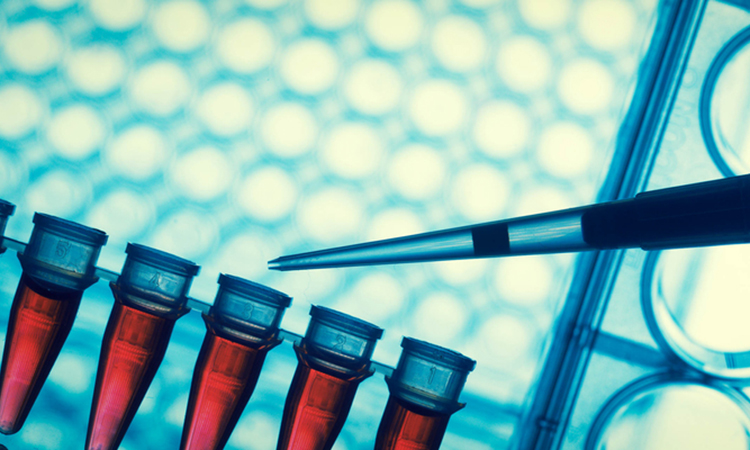
Scientists have demonstrated the potential of a novel blood test for cathepsin B, a well-studied protein important to brain development and function, as an indicator for a range of disease states. The new assay was developed at the Walter Reed Army Institute for Research, US.
The team say that cathepsin B plays an important role in the body, regulating the metabolism, immune responses, degradation of improperly produced proteins and other functions. Under certain conditions, such as metastatic cancers, infections, trauma and neurological disease, cathepsin B production is upregulated. Recent research published by the scientists highlighted the potential of cathepsin B as an indicator or biomarker of the severity of traumatic brain injury.
In the new study, the researchers demonstrated an ultrasensitive assay to measure cathepsin B in blood. While high levels of cathepsin B are readily detectable in aspirates, biopsies and cerebrospinal fluid, a blood test is particularly desirable due to its ease of use with little risk to the patient.
Drug Target Review has just announced the launch of its NEW and EXCLUSIVE report examining the evolution of AI and informatics in drug discovery and development.
In this 63 page in-depth report, experts and researchers explore the key benefits of AI and informatics processes, reveal where the challenges lie for the implementation of AI and how they see the use of these technologies streamlining workflows in the future.
Also featured are exclusive interviews with leading scientists from AstraZeneca, Auransa, PolarisQB and Chalmers University of Technology.
“Although cathepsin can be abundant in some tissues, accurate measurement in blood has been a challenge, especially if changes are expected to be small or sample is limited,” said Dr Bharani Thangavelu, lead author on the paper. “Our strategy uses an ultrasensitive technique to improve cathepsin B detection from small volumes of blood with little to no noise or impact from interfering substances.”
The researchers plan to continue developing and testing the assay, ultimately aiming to develop it into a small, portable diagnostic tool.
“Biomarker tests that accurately reflect the extent and severity of injury can dramatically improve the standard of care, minimising the need for resource-intensive diagnostics,” said Dr Angela Boutté, one of the authors of the study. “This would allow for early, accurate detection as well as monitoring of injury or disease.”
The study was published in ACS Omega.
Related topics
Assays, Biomarkers, Disease research, Polymerase Chain Reactions (PCRs)
Related conditions
Cancer
Related organisations
Walter Reed Army Institute for Research
Related people
Dr Angela Boutté, Dr Bharani Thangavelu
