


Compounds that inhibit main protease of SARS-CoV-2 discovered
Posted: 4 March 2021 | Victoria Rees (Drug Target Review) | No comments yet
Using high-throughput screening techniques, researchers have identified two families of active substances that block SARS-CoV-2 replication.
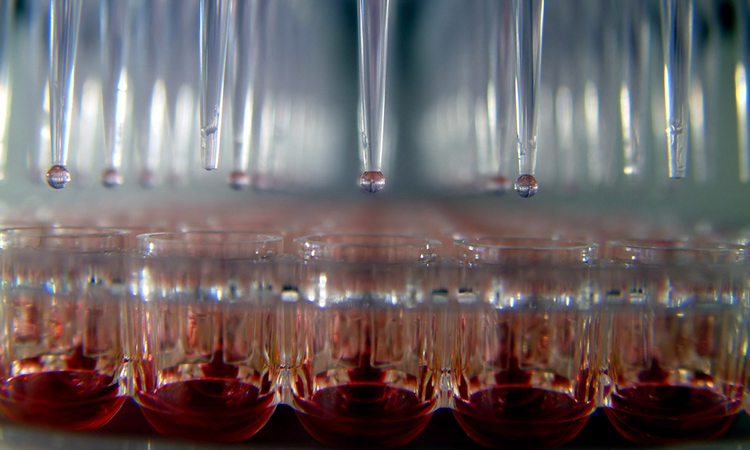
A research team at the University of Bonn, Germany, has used high-throughput screening to discover two families of active substances that can block the replication of the SARS-CoV-2 coronavirus. According to the scientists, the drug candidates are able to switch off the key enzyme of the virus, the main protease (Mpro).
With regular news updates and feature articles, our COVID-19 hub has everything you need to keep up to date with R&D during the pandemic. Click below to visit:
The team explain that for the SARS-CoV-2 coronavirus to replicate, it relies on the Mpro as a key enzyme. The virus first has its genome translated from RNA into a large protein strand. The viral main protease then cuts this protein chain into smaller pieces, from which the new virus particles are formed.
“The Mpro is an extremely promising starting point for coronavirus drug research,” said Professor Christa Müller, one of the lead researchers. “If this enzyme is blocked, viral replication in the body’s cells is stopped.”
Drug Target Review has just announced the launch of its NEW and EXCLUSIVE report examining the evolution of AI and informatics in drug discovery and development.
In this 63 page in-depth report, experts and researchers explore the key benefits of AI and informatics processes, reveal where the challenges lie for the implementation of AI and how they see the use of these technologies streamlining workflows in the future.
Also featured are exclusive interviews with leading scientists from AstraZeneca, Auransa, PolarisQB and Chalmers University of Technology.
The pharmaceutical chemists designed a large number of potential inhibitors based on the structure of the Mpro and the mechanism by which the important virus-replicating enzyme works.
The researchers next developed a new test system for high-throughput screening. They offered the SARS-CoV-2 Mpro a substrate to which a reporter molecule was coupled. When the protease catalytically cleaved this coupling, the fluorescence of the product was measurable. However, if a simultaneously administered inhibitor successfully blocked the activity of the protease, there was no fluorescence.
“For most of the test compounds, we observed no enzyme inhibition. However on rare occasions in our comprehensive tests, fluorescence was suppressed. These were the hits we had hoped for in our search for inhibitors of the viral protease,” said Professor Michael Gütschow, who heads an independent research group on such inhibitors.
The high-throughput screening showed two classes of drugs that appeared to be particularly promising. Customised compounds of both classes were then newly synthesised by the team. They found that these stick to the Mpro like chewing gum and block the crucial catalytic centre, which prevents the protease from preparing viral replication.
“Some of the compounds even have another effect,” Müller reported. “They also inhibit a human enzyme that helps the virus enter body cells.”
The team emphasises that extensive clinical trials have yet to prove whether these candidates also inhibit SARS-CoV-2 replication in humans.
The results have been published in Angewandte Chemie.
Related topics
Drug Discovery, Drug Leads, High Throughput Screening (HTS)
Related conditions
Covid-19
Related organisations
University of Bonn
Related people
Professor Christa Müller, Professor Michael Gütschow
