


Scientists reveal four discoveries about early SARS-CoV-2 infection
Posted: 11 February 2021 | Victoria Rees (Drug Target Review) | No comments yet
Researchers studying SARS-CoV-2 at the individual cellular level have made four major discoveries about early infection from the coronavirus.
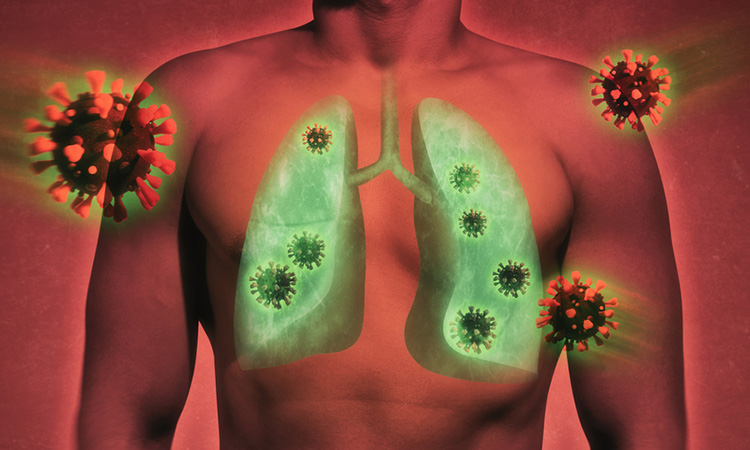
Researchers have studied SARS-CoV-2 infections at individual cellular levels and made four major discoveries about the coronavirus, including one that validates the effectiveness of remdesivir – a US Food and Drug Administration (FDA)-approved antiviral drug – as a form of treatment for severe COVID-19 disease.
With regular news updates and feature articles, our COVID-19 hub has everything you need to keep up to date with R&D during the pandemic. Click below to visit:
The study was conducted at the University of Minnesota Medical School, US.
“Since the start of the COVID-19 pandemic, the way that each individual responds differently to the infection has been closely studied. In our new study, we examined variations in the way individual cells reacted differently to the coronavirus and responded to antiviral treatment,” said Associate Professor Ryan Langlois, senior author of the study.
Drug Target Review has just announced the launch of its NEW and EXCLUSIVE report examining the evolution of AI and informatics in drug discovery and development.
In this 63 page in-depth report, experts and researchers explore the key benefits of AI and informatics processes, reveal where the challenges lie for the implementation of AI and how they see the use of these technologies streamlining workflows in the future.
Also featured are exclusive interviews with leading scientists from AstraZeneca, Auransa, PolarisQB and Chalmers University of Technology.
The study revealed that:
- SARS-CoV-2 primarily infects two types of cells in the upper respiratory tract – ciliated cells and goblet cells
- Goblet cells are the main producer of pro-inflammatory responses, which are common in severe COVID-19 cases
- Remdesivir is effective in blocking virus replication in all cell types in the upper respiratory tract
- SARS-CoV-2 is highly effective at evading initial detection by the innate immune system, but when detected, virus replication is efficiently blunted by antiviral responses.
“Understanding early events in virus-host interactions is critical for understanding the pathophysiology of the disease as well as for identifying appropriate antiviral and immunomodulatory drugs,” Langlois said. “Our results show that ciliated airway epithelial cells are the predominant cell type initially infected by SARS-CoV-2 and importantly, that remdesivir is capable of reducing viral replication in all infected cell types within this culture system.”
The diverse population of cells lining the human airway, called airway epithelium, is the first line of defence against SARS-CoV-2 and can set the stage for immune responses that either protect against disease or cause damage. Using a cutting-edge technique that measures reactions by single cells, the team discovered that SARS-CoV-2 is capable of infecting most cell types in the human airway and identified a key gene required for viral entry.
“As expected, we observed a large amount of variation between different cells in the antiviral immune response, paving the way for future studies that will better characterise why some individuals are relatively protected against severe COVID-19 disease,” Langlois said.
The findings are published in PLOS Pathogens.
Related topics
Disease research, Drug Development, Immunology, In Vitro, Target Validation, Therapeutics
Related conditions
Covid-19
Related organisations
University of Minnesota Medical School
Related people
Associate Professor Ryan Langlois
