


Scientists propose treating SARS-CoV-2 with sofosbuvir and remdesivir
Posted: 7 October 2020 | Victoria Rees (Drug Target Review) | No comments yet
Researchers have posited that SARS-CoV-2 could be combatted by sofosbuvir, in combination with other antivirals such as remdesivir.
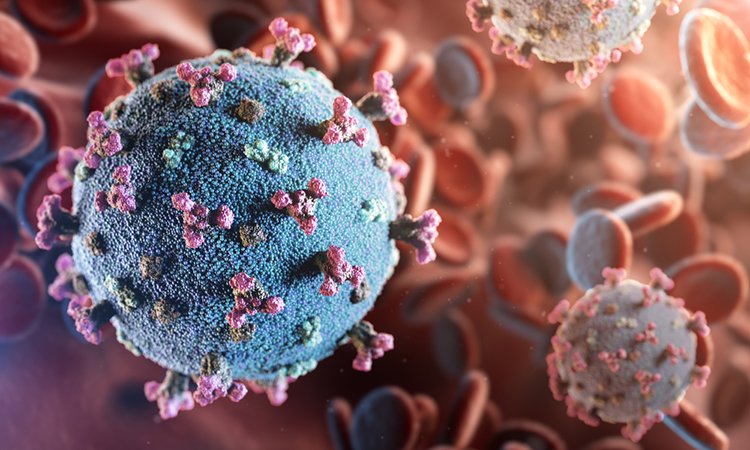
Researchers have suggested that sofosbuvir could be used in combination with other antivirals to combat SARS-CoV-2, the virus that causes COVID-19.
With regular news updates and feature articles, our COVID-19 hub has everything you need to keep up to date with R&D during the pandemic. Click below to visit:
The team, from Columbia University School of Engineering and Applied Science, US, say that SARS-CoV-2 has an exonuclease-based proofreader to maintain its viral genome integrity. Therefore, any effective antiviral targeting the SARS-CoV-2 RNA-dependent RNA polymerases (RdRps) must display a certain level of resistance to this proofreading activity.
The researchers revealed that sofosbuvir-terminated RNA is more resistant to the proofreader of SARS-CoV-2 than remdesivir-terminated RNA. They say that the results of this study support the use of the US Food and Drug Administration (FDA)-approved hepatitis C drug Epclusa (sofosbuvir/velpatasvir) in combination with other drugs in COVID-19 clinical trials.
Drug Target Review has just announced the launch of its NEW and EXCLUSIVE report examining the evolution of AI and informatics in drug discovery and development.
In this 63 page in-depth report, experts and researchers explore the key benefits of AI and informatics processes, reveal where the challenges lie for the implementation of AI and how they see the use of these technologies streamlining workflows in the future.
Also featured are exclusive interviews with leading scientists from AstraZeneca, Auransa, PolarisQB and Chalmers University of Technology.
“We found that the RNA terminated by sofosbuvir resists removal by the exonuclease to a substantially higher extent than RNA terminated by remdesivir, another drug being used as a COVID-19 therapeutic,” said the team’s lead Professor Jingyue Ju.
Last January, before COVID-19 reached pandemic status, the team posited that Epclusa might inhibit SARS-CoV-2. Their reasoning was based on the analysis of the molecular structures and activities of hepatitis C viral inhibitors and a comparison of hepatitis C virus and coronavirus replication.
In a subsequent study, the researchers demonstrated that the active drug sofosbuvir triphosphate is incorporated by SARS-CoV and SARS-CoV-2 polymerases, shutting down the polymerase reaction. Other investigators have since demonstrated the ability of sofosbuvir to inhibit SARS-CoV-2 replication in lung and brain cells; currently, COVID-19 clinical trials with a number of hepatitis C drugs such as Epclusa and the combination of sofosbuvir and daclatasvir (similar to velpatasvir) are ongoing in several countries.
Ju noted that a recent pre-print from the University of California, Berkeley, US, indicates that a combination of remdesivir and Epclusa increases remdesivir’s efficacy 25-fold in inhibiting SARS-CoV-2: “These results offer a molecular basis supporting the study of Epclusa in combination with remdesivir for COVID-19 clinical trials.”
The study was published in Scientific Reports.
Related topics
Drug Development, Drug Leads, Drug Targets, RNAs, Target molecule, Therapeutics
Related conditions
Covid-19
Related organisations
Columbia University, University of California (UC) Berkeley
Related people
Professor Jingyue Ju
