


Medicine against bone disease found in Saussurea leaves
Posted: 4 December 2019 | Rachael Harper (Drug Target Review) | No comments yet
Isolated components found in the Saussurea controversa plant have antimicrobial and regenerative properties which could lead to a treatment for bone diseases.
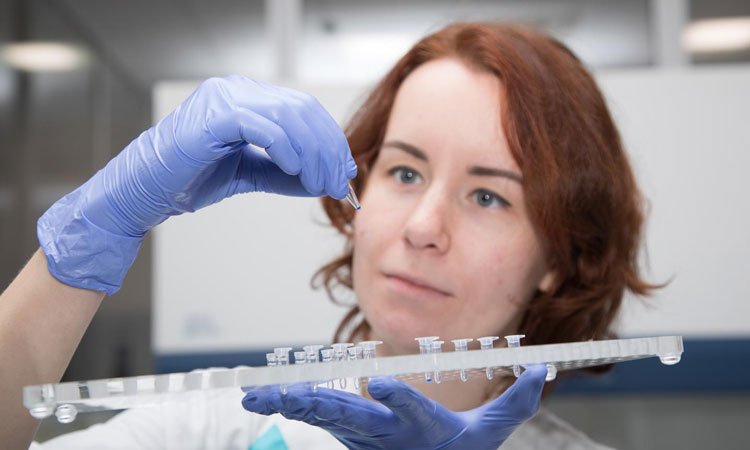
Bacterial bone infections are quite resistant to antibiotics and require new therapeutic approaches. A team of researchers from Kant Baltic Federal University discovered the ability of an extract from the leaves of Saussurea controversa to considerably reduce inflammatory processes and increase immune response in cases of osteomyelitis (credit: Larisa Litvinova).
A team of researchers from Kant Baltic Federal University (BFU), Russia has discovered that leaves from the plant, Saussurea controversa, could potentially reduce inflammatory processes and increase the immune response against osteomyelitis.
Saussurea controversa has been traditionally used to treat liver, kidney, digestive tract and locomotive diseases. Its dried leaves are sold in pharmacies because their decoction is widely used as a medicine against cold and bronchitis.
To understand what substances this plant owes its medicinal properties to, a team of scientists from Siberian State Medical University and Tomsk Polytechnic University extracted individual components from the plant and determined their composition. The useful components of the decoction included flavonoids and polysaccharides. These groups of substances are known for their antimicrobial properties and the ability to speed up bone tissue regeneration.
Drug Target Review has just announced the launch of its NEW and EXCLUSIVE report examining the evolution of AI and informatics in drug discovery and development.
In this 63 page in-depth report, experts and researchers explore the key benefits of AI and informatics processes, reveal where the challenges lie for the implementation of AI and how they see the use of these technologies streamlining workflows in the future.
Also featured are exclusive interviews with leading scientists from AstraZeneca, Auransa, PolarisQB and Chalmers University of Technology.
The scientists from the BFU have suggested using Saussurea extract to treat bone tissue infections and tested its ability to affect stem cells. To do so, the extract of Saussurea leaves was added to the substrate with such cells. The growth of the cell culture slowed down under the influence of plant polysaccharides. It turned out that Saussurea did not stimulate the division of stem cells, but made them turn into bone tissue.
To test the antibacterial properties of Saussurea, the scientists added the extract of its leaves into a substrate with Staphylococcus aureus. These bacteria cause such deadly diseases as osteomyelitis, endocarditis, pneumonia and sepsis. Moreover, they are highly resistant to a wide range of antibiotics making the therapy long and complicated. The experiment showed the decrease of S. aureus growth in the substrate with Saussurea compared to a control group.
“The isolated components have antimicrobial and regenerative properties,” concluded Larisa Litvinova, MD, a Head of the Basic Laboratory for Immunology and Cell Biotechnologies, Professor of the Department of Fundamental Medicine, Institute of Medicine, BFU. “Our plan is to participate in the development of a medicinal drug for the comprehensive treatment of bone diseases and injuries associated with the risk of infectious complications. Plant materials are less toxic. They can be administered as regular pills making the treatment much easier.”
The study was published in Molecules.
Related topics
Antibiotics, Drug Development, Regenerative Medicine, Research & Development, Stem Cells, Target Validation, Targets, Therapeutics
Related conditions
endocarditis, osteomyelitis, pneumonia, Sepsis
Related organisations
Kant Baltic Federal University, Siberian State Medical University, Tomsk Polytechnic University
Related people
Larisa Litvinova MD
