


Intervening tau accumulation could halt progression of Alzheimer’s
Posted: 29 October 2019 | Victoria Rees (Drug Target Review) | No comments yet
A group of researchers has found that tau misfolding is not harmful in itself, but instead the cellular processes its affects kills neurons.
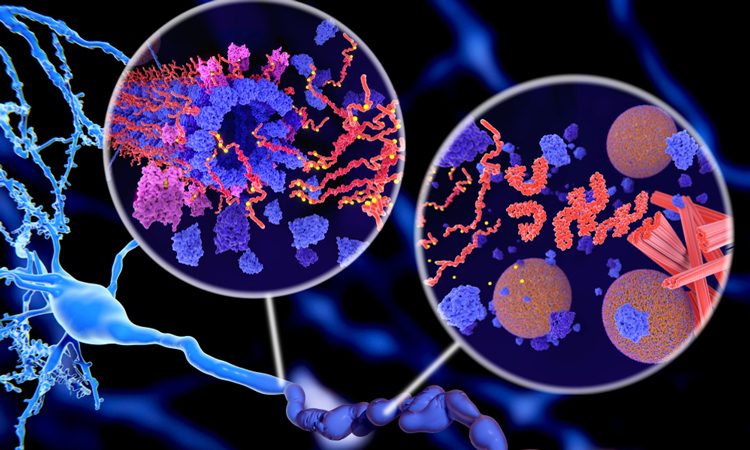
A new study has found that tau pathology in Alzheimer’s disease can spread quickly but is not immediately harmful. The researchers suggest that therefore, “neurons with tau pathology could be rescued with a therapeutic disease modifier”.
The study was conducted by a group of researchers at the Society for Neuroscience.
Tau pathology occurs when tau proteins misfold and are an indication of neurodegeneration. However, the relationships between initial tau misfolding, propagation across connected neurons and cytotoxicity are unknown.
Drug Target Review has just announced the launch of its NEW and EXCLUSIVE report examining the evolution of AI and informatics in drug discovery and development.
In this 63 page in-depth report, experts and researchers explore the key benefits of AI and informatics processes, reveal where the challenges lie for the implementation of AI and how they see the use of these technologies streamlining workflows in the future.
Also featured are exclusive interviews with leading scientists from AstraZeneca, Auransa, PolarisQB and Chalmers University of Technology.
The team introduced diseased tau into mouse neurons growing in a cell culture. They found that within days, the activated tau had spread to other neurons and begun to misfold and accumulate.
However, despite the tau build-up, the researchers observed that both donating and accepting neurons remained healthy and capable of sending electrical messages.
The researchers concluded that tau itself is not harmful, but the cellular processes it disrupts kill neurons. Therefore, intervening during the initial accumulation of tau could potentially halt the progression of Alzheimer’s disease.
The team also highlight that their findings present a time window for therapeutic intervention to treat Alzheimer’s disease.
The findings were published in JNeurosci.
Related topics
Drug Targets, Neurons, Neurosciences, Research & Development
Related conditions
Alzheimer’s disease
Related organisations
Society for Neuroscience
