


Gene identified in zebrafish effective at repairing heart damage
Posted: 24 October 2019 | Victoria Rees (Drug Target Review) | No comments yet
Researchers have discovered a gene in zebrafish that enables them to successfully recover after cardiac damage, which could be used to repair heart tissues in humans.
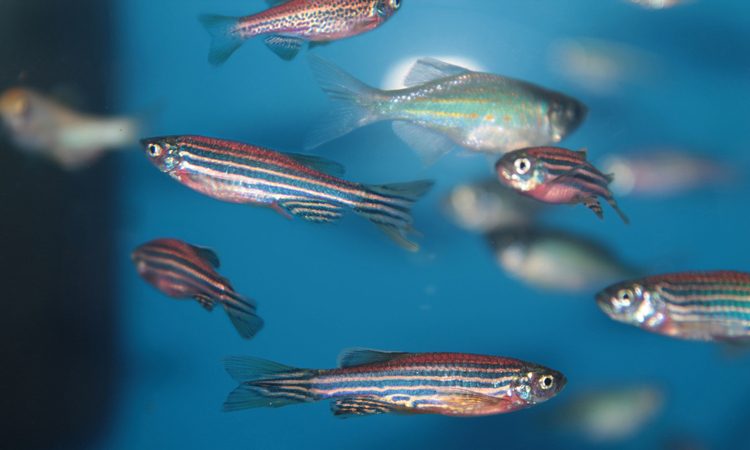
Researchers have found and studied a particular gene in zebrafish that aids in their recovery from cardiac damage. They suggest their findings could be used in stimulating the repair process of the human heart.

Images of an uninjured zebrafish heart (a,b) and one injured at the tip (IA), (c,d,). sox10-derived cardiomyocytes are shown in red, other myocardial cells in green. The number of the sox10-derived cells increases after injury, and the cells accumulate at the borders of the injury (credit: Marcos Sand-Melon).
The study was led by researchers at the University of Bern, Switzerland, who teamed up with scientists from other institutions.
After heart injury, zebrafish cardiomyocytes (cardiac muscle cells) can divide and scars are replaced by new cardiac muscle.
Drug Target Review has just announced the launch of its NEW and EXCLUSIVE report examining the evolution of AI and informatics in drug discovery and development.
In this 63 page in-depth report, experts and researchers explore the key benefits of AI and informatics processes, reveal where the challenges lie for the implementation of AI and how they see the use of these technologies streamlining workflows in the future.
Also featured are exclusive interviews with leading scientists from AstraZeneca, Auransa, PolarisQB and Chalmers University of Technology.
However, the researchers found that not all cardiomyocytes in the zebrafish contribute equally to regeneration of lost muscle. A specific subset with enhanced regenerative capacity is responsible for repairing damage to the heart.
Using transgenic tools, the team identified the subset as marked with expression of the sox10 gene. When the team erased this cell population from zebrafish, heart regeneration was impaired.
“We were able to identify a specific cell population that is more efficient than all other heart muscle cells during regeneration and showed that its contribution to repair is essential,” says lead researcher Nadia Mercader.
The team say their next step is to reveal whether the absence of sox10 gene expression in mammals explains why hearts do not regenerate well after cardiac damage.
The results were published in Cell Reports.
Related topics
Disease research, Drug Targets, Genomics, Research & Development
Related organisations
University of Bern
Related people
Nadia Mercader
