


Study reveals how circulating tumour cells target organs
Posted: 23 October 2019 | Victoria Rees (Drug Target Review) | No comments yet
Regulator genes and proteins have been identified on circulating tumour cells in mice which allow them to target other organs in the body.
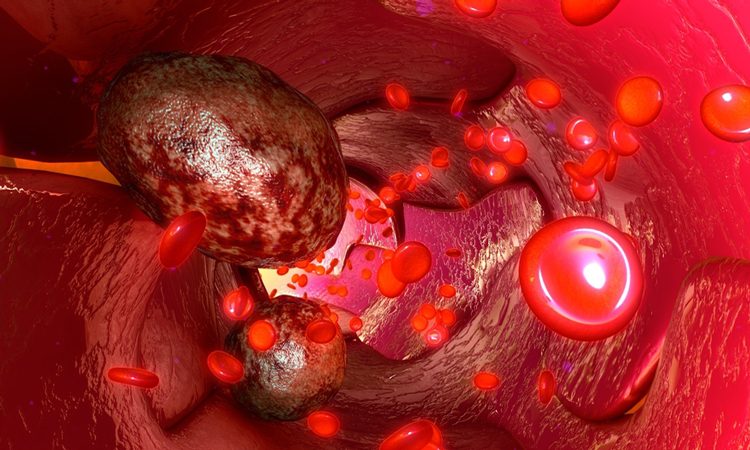
Researchers have revealed the mechanisms behind hematogenous metastasis of circulating tumour cells (CTCs). According to the team, their findings could be used to develop treatments to halt the spread of cancer.
The study, conducted at the University of Southern California (USC), US, investigated brain-invading breast cancer cells circulating in the blood. The researchers found that they have a molecular signature that indicates their specific organ preferences.

Development of brain metastasis is a complex process in which metastatic cells (green) overcome the protective effect of immune cells (red) (credit: Remi Klotz in Yu lab/USC).
Isolating breast cancer cells from the blood of breast cancer patients with metastatic tumours, the cells were then expanded and grown in the lab.
Drug Target Review has just announced the launch of its NEW and EXCLUSIVE report examining the evolution of AI and informatics in drug discovery and development.
In this 63 page in-depth report, experts and researchers explore the key benefits of AI and informatics processes, reveal where the challenges lie for the implementation of AI and how they see the use of these technologies streamlining workflows in the future.
Also featured are exclusive interviews with leading scientists from AstraZeneca, Auransa, PolarisQB and Chalmers University of Technology.
These tumour cells were injected into the bloodstream of mouse models, which allowed the scientists to identify genes and proteins that directed their migration towards the brain.
Using genome-wide sequencing, variants of semaphorin 4D (SEMA4D) were discovered as regulators of tumour cell transmigration to the brain, allowing cells to cross the blood-brain barrier.
The MYC gene was also identified as a crucial regulator for the adaption of metastatic tumour cells into the brain microenvironment. This protected the tumour cells from the brain’s immune response.
“We can imagine someday using the information carried by circulating tumour cells to improve the detection, monitoring and treatment of the spreading cancers,” said Min Yu, assistant professor of stem cell and regenerative medicine at USC. “A future therapeutic goal is to develop drugs that get rid of circulating tumour cells or target those molecular signatures to prevent the spread of cancer.”
The results were published in Cancer Discovery.
Related topics
Disease research, Drug Targets, Oncology
Related conditions
Cancer
Related organisations
University of Southern California (USC)
Related people
Min Yu
