


New way to target treatment-resistant cancers identified
Posted: 22 October 2019 | Rachael Harper (Drug Target Review) | No comments yet
A new mechanism by which cancer cells become resistant to chemotherapy has been found which could lead to a new target for drugs.
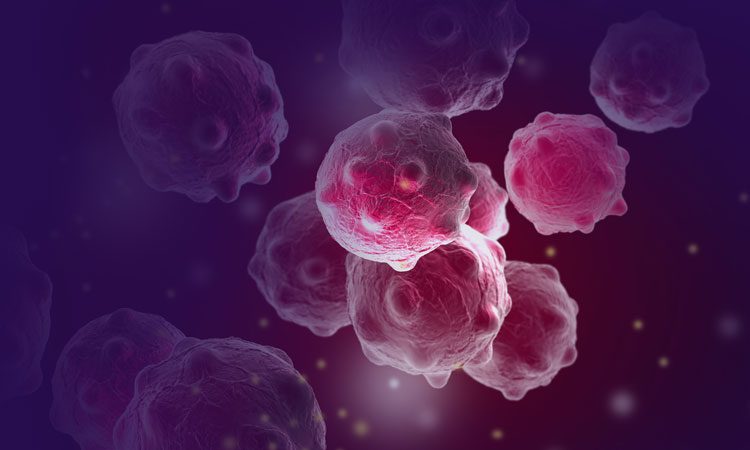
A new way cancer becomes resistant to chemotherapy has been discovered by researchers from Germany and Imperial College London, suggesting a new target for oncologic drugs.
Chemotherapy kills cancer cells by inducing ‘cell death’, one form of which (ferroptosis – iron-dependent cell death) is caused by the degradation of lipids that make up the cell membrane.
Now, scientists have discovered a new mechanism by which cancer cells become resistant to ferroptosis. Many aggressive and drug-resistant cancers are vulnerable to ferroptosis but they can also use particular mechanisms to block it.
Drug Target Review has just announced the launch of its NEW and EXCLUSIVE report examining the evolution of AI and informatics in drug discovery and development.
In this 63 page in-depth report, experts and researchers explore the key benefits of AI and informatics processes, reveal where the challenges lie for the implementation of AI and how they see the use of these technologies streamlining workflows in the future.
Also featured are exclusive interviews with leading scientists from AstraZeneca, Auransa, PolarisQB and Chalmers University of Technology.
The new study identified a new target for drugs that suppress the novel mechanism, allowing ferroptosis cell death to take hold in susceptible cancer cells.
“Discovering a completely new way cells gain resistance will allow us to design drugs that target this mechanism,” said Professor Ed Tate at Imperial.
Discovering a completely new way cells gain resistance will allow us to design drugs that target this mechanism”
Ferroptosis relies on oxidation on lipids in the cell membrane – the stripping of electrons from these lipids, causing them to degrade. It was already known that one molecule, called glutathione peroxidase 4 (GPX4), reverses this process, acting as an antioxidant. However, the researchers discovered a different molecule called FSP1 that also acts as a lipid antioxidant, rescuing cancer cells from ferroptosis cell death even when they are starved of GPX4.
The team also found several potential ways to target it with drugs and therefore reduce resistance.
To work, FSP1 needs the help of an enzyme called N-myristoyltransferase, or NMT. Previously, the team at Imperial developed drug leads for suppressing the activity of NMT in order to block infection by the common cold virus.
“As therapy-resistant tumours gain resistance to ferroptosis, treatments that promote ferroptosis based on inhibition of FSP1, GPX4, NMT or a combination of all three, have great potential for translation into future clinical applications,” added Andrea Goya Grocin from Imperial.
The study was published in Nature.
Related topics
chemotherapy, Drug Targets, Lipids, Oncology, Research & Development, Targets
Related conditions
Cancer
Related organisations
Imperial College London
Related people
Andrea Goya Grocin, Professor Ed Tate
