


New vaccine prevents genital herpes in mice and guinea pigs
Posted: 23 September 2019 | Rachael Harper (Drug Target Review) | No comments yet
Almost all animal subjects exposed to genital herpes were protected by the novel vaccine.
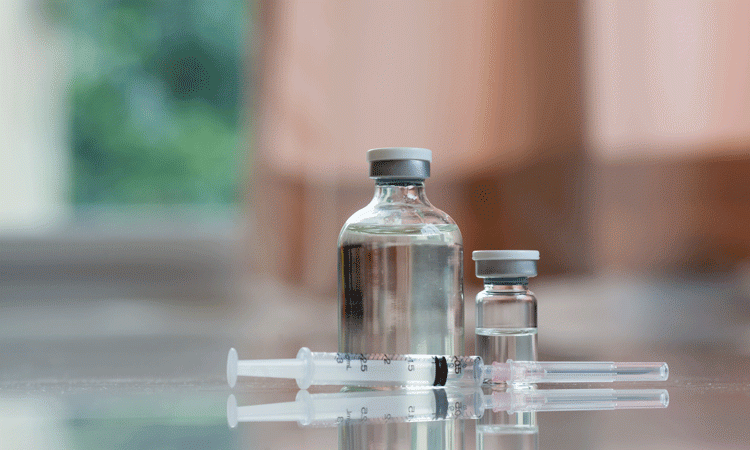
A vaccine developed to protect against genital herpes has been successfully tested on both mice and guinea pigs, which has led to the strongest type of immunity against the virus.
Researchers from Perelman School of Medicine at the University of Pennsylvania, US delivered the vaccine to 64 mice and then exposed them to genital herpes. After 28 days, 63 of the mice had no trace of herpes infection or disease after the exposure. Similarly, 10 guinea pigs were also given the vaccine and exposed to the virus, with no animal developing genital lesions. Two showed evidence that they became infected, but the infection was not in a form that would enable the animals to transmit the virus.
“Based on these results, it is our hope that this vaccine could be translated into human studies to test both the safety and efficacy of our approach,” said Harvey Friedman, MD, a professor of Infectious Diseases and the study’s principal investigator.
Drug Target Review has just announced the launch of its NEW and EXCLUSIVE report examining the evolution of AI and informatics in drug discovery and development.
In this 63 page in-depth report, experts and researchers explore the key benefits of AI and informatics processes, reveal where the challenges lie for the implementation of AI and how they see the use of these technologies streamlining workflows in the future.
Also featured are exclusive interviews with leading scientists from AstraZeneca, Auransa, PolarisQB and Chalmers University of Technology.
The team filled their vaccine with specific messenger RNAs (mRNA), which stimulates three types of antibodies: one that blocks the herpes virus from entering cells and two that ensure the virus does not ‘turn off’ the innate immune system’s protective functions.
Since herpes is so widespread but also often undetected, as it is only visible during an outbreak, the researchers say a successful vaccine would be invaluable to many adults across the world.
The results of the study were published in Science Immunology.
Related topics
Analysis, Antibodies, RNAs, Targets, Vaccine
Related conditions
Genital herpes
Related organisations
Perelman School of Medicine at the University of Pennsylvania
Related people
Harvey Friedman MD
