


Human digestive tract database available for researchers
Posted: 3 September 2019 | Victoria Rees (Drug Target Review) | No comments yet
A team from MIT sequenced bacteria samples from the digestive system which can be accessed by researchers to use in the development of treatments.
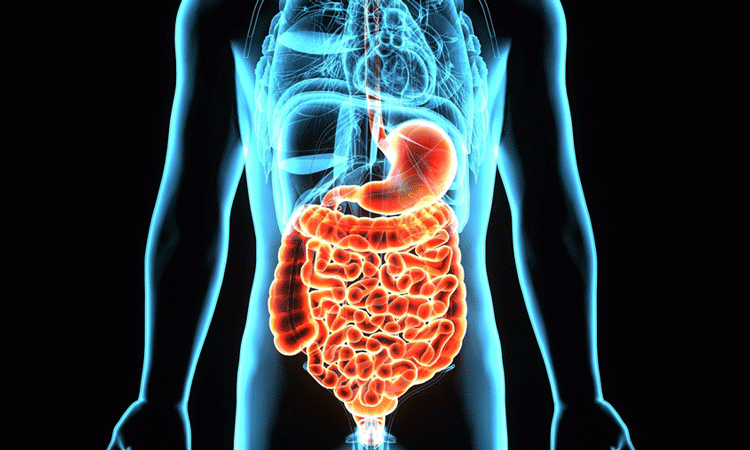
Researchers from the Massachusetts Institute of Technology (MIT) and the Broad Institute, US, have isolated and preserved nearly 8,000 strains of bacteria samples from the human digestive tract. The dataset is available to other researchers who wish to use it.
According to the developers, the information may help researchers to create new treatments for a variety of diseases. The team have also identified the genetic and metabolic context of the samples in the BIO-ML database.
“There’s a lot of excitement in the microbiome field because there are associations between these bacteria and health and disease. But we’re lacking in being able to understand why that is, what’s the mechanism and what are the functions of those bacteria that are causing them to associate with disease,” said Eric Alm, director of MIT’s Center for Microbiome Informatics and Therapeutics, who is the senior author of the study.
Drug Target Review has just announced the launch of its NEW and EXCLUSIVE report examining the evolution of AI and informatics in drug discovery and development.
In this 63 page in-depth report, experts and researchers explore the key benefits of AI and informatics processes, reveal where the challenges lie for the implementation of AI and how they see the use of these technologies streamlining workflows in the future.
Also featured are exclusive interviews with leading scientists from AstraZeneca, Auransa, PolarisQB and Chalmers University of Technology.
The researchers collected stool samples from approximately 90 people for up to two years. They isolated a total of 7,758 strains from the six major phyla of bacteria that dominate the digestive tract. For 3,632 of these strains, the team sequenced the full genomes and they also sequenced partial genomes of the remaining strains.
They are now gathering more samples from around the globe to expand their database further.
“More than ever before, modern techniques allow us to isolate previously uncultured human gut bacteria. Exploring this genetic and functional diversity is fascinating – everywhere we look, we discover new things. I’m convinced that enriching biobanks with a large diversity of strains from individuals living diverse lifestyles is essential for future advancements in human microbiome research,” added Mathilde Poyet, a senior postdoc at MIT and one of the lead authors of the study.
The study was published in Nature Medicine.
Related topics
Disease research, Drug Discovery, Drug Targets, Informatics, Screening, Sequencing
Related organisations
Broad Institute, Massachusetts Institute of Technology (MIT), Nature Medicine
Related people
Eric Alm, Mathilde Poyet
