


Gene linked to rare disorder also regulates key enzyme in Alzheimer’s
Posted: 22 August 2019 | Rachael Harper (Drug Target Review) | No comments yet
A gene associated with a rare balance disorder also regulates the behaviour of an enzyme that increases the risk for Alzheimer’s disease.
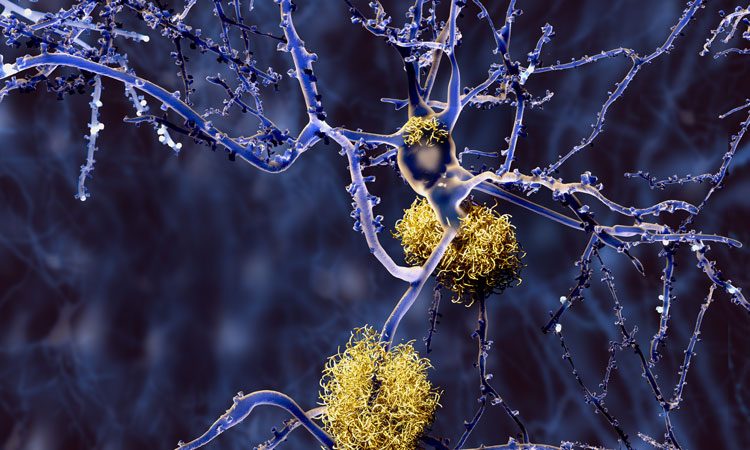
According to a new study, a gene that can become mutated and cause a rare balance disorder also regulates the behaviour of an enzyme that increases the risk for Alzheimer’s disease (AD). This discovery may help to identify new targets for experimental medications designed to delay or stop the onset of AD.
Rudolph E Tanzi, PhD, director of the Genetics and Aging Research Unit at Massachusetts General Hospital (MGH), US, and his colleagues have previously identified several genes that are associated with AD. They include ATXN1, which carries the genetic code for producing a protein called ataxin-1.
It was already known that a variation known as a ‘gain of function’ mutation in ATXN1 causes spinocerebellar ataxia type 1 (SCA1). However, the ATXN1 mutation that causes SCA1 is not associated with AD and the role ataxin-1 might play in the disease remained unknown.
Drug Target Review has just announced the launch of its NEW and EXCLUSIVE report examining the evolution of AI and informatics in drug discovery and development.
In this 63 page in-depth report, experts and researchers explore the key benefits of AI and informatics processes, reveal where the challenges lie for the implementation of AI and how they see the use of these technologies streamlining workflows in the future.
Also featured are exclusive interviews with leading scientists from AstraZeneca, Auransa, PolarisQB and Chalmers University of Technology.
“We asked whether loss of ataxin-1 function could lead to Alzheimer’s disease,” said MGH neuroscientist Jaehong Suh, PhD.
Suh supervised a team that crossbred mice which had the ATXN1 gene deleted, causing them to lack ataxin-1, with a second group of mice that had been bred to have AD. These pairings produced offspring that were missing ataxin-1, which in turn made their levels of an enzyme called beta-secretase 1 (BACE1) to rise.
BACE1 plays an essential role in the formation of amyloid plaques, which are clusters of damaged nerve cells and other proteins in the brain that are one of the hallmarks of AD.
Mice lacking ataxin-1 had significantly greater deposits of amyloid plaque than the AD mice. They also had higher levels of inflamed brain tissue, formed fewer new neurons in regions associated with memory and learning and had impaired axons, which are fibers that carry signals between neurons.
Several experimental drugs that block BACE1 have failed due to toxicity, but discovering ataxin-1’s role in regulating this enzyme “could provide a new avenue to safely stop formation of amyloid plaques and potentially prevent this disease before it causes symptoms,” said Tanzi.
The study was published in the journal Cell.
Related topics
Disease research, Drug Targets, Enzymes, Gene testing, Protein, Research & Development
Related conditions
Alzheimer’s disease
Related organisations
Cell, Massachusetts General Hospital (MGH)
Related people
Jaehong Suh PhD, Rudolph E Tanzi PhD
