


Single enzyme provides target for new sepsis drugs
Posted: 14 August 2019 | Rachael Harper (Drug Target Review) | No comments yet
Researchers have discovered that removing the enzyme, PHLPP1, improves outcomes in a mouse model of sepsis so could be a potential drug target.
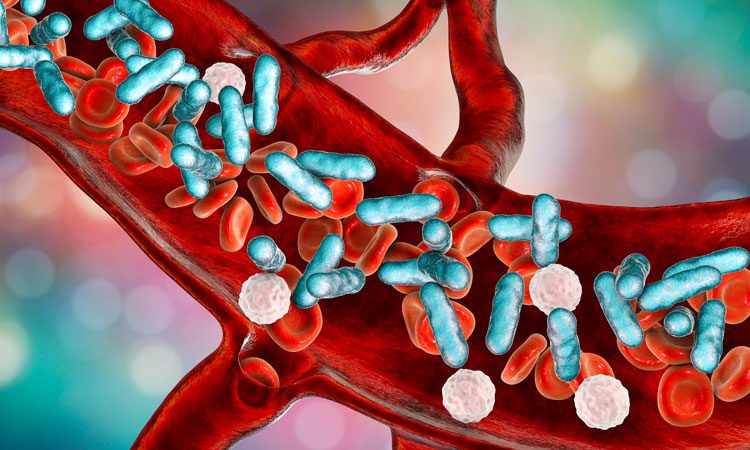
Researchers have found that deleting the enzyme, PHLPP1, improved outcomes in a mouse model of sepsis and also controls many cell behaviours by removing phosphates from other proteins. It also influences inflammation, which introduces the possibility that inhibiting PHLPP1 could form the basis for new sepsis treatments in humans.
The researchers from the University of California San Diego School of Medicine uncovered many immune cell genes that are influenced by PHLPP1. But PHLPP1’s particular influence on inflammation could be linked to the fact that it removes phosphates from a transcription factor called STAT1, which is known for controlling inflammatory genes.
“Most research on inflammation has typically focused on kinases, enzymes that add phosphate tags to other proteins,” said senior author Alexandra Newton, PhD, professor in the Department of Pharmacology at UC San Diego School of Medicine. “It’s exciting to have a completely new target for sepsis – the enzymes that remove them.”
Drug Target Review has just announced the launch of its NEW and EXCLUSIVE report examining the evolution of AI and informatics in drug discovery and development.
In this 63 page in-depth report, experts and researchers explore the key benefits of AI and informatics processes, reveal where the challenges lie for the implementation of AI and how they see the use of these technologies streamlining workflows in the future.
Also featured are exclusive interviews with leading scientists from AstraZeneca, Auransa, PolarisQB and Chalmers University of Technology.
In separate experiments, the team administered live E. coli bacteria and lipopolysaccharide (LPS), to both PHLPP1-deficient and normal mice and mice without PHLPP1 fared much better. While all normal mice died of the infection-induced sepsis after five days, half of the PHLPP1-deficient mice survived.
Now that they know PHLPP1 inhibitors might form the basis for new anti-sepsis drugs, the researchers hope to test these compounds on immune cells in the lab and in the mouse model of sepsis.
“Sepsis is the leading cause of death in intensive care units throughout the world, but unfortunately there is not a single approved drug treatment for sepsis,” added Victor Nizet, MD. “Discoveries like ours of fundamental signaling pathways that control immune cell behaviour during sepsis offer clues for controlling the dangerous inflammation of sepsis while preserving the critical bacterial killing properties of white blood cells.”
The study was published in eLife.
Related topics
Cell culture, Drug Targets, Enzymes, Protein, Research & Development, Targets
Related conditions
Sepsis
Related organisations
University of California San Diego School of Medicine
Related people
Alexandra Newton PhD, Victor Nizet MD
