


Molecule identified as key in pancreatic cancer metastasis
Posted: 12 August 2019 | Victoria Rees (Drug Target Review) | No comments yet
New findings show that the environment for pancreatic cancers plays a role in its metastasis, revealing a new potential drug target.
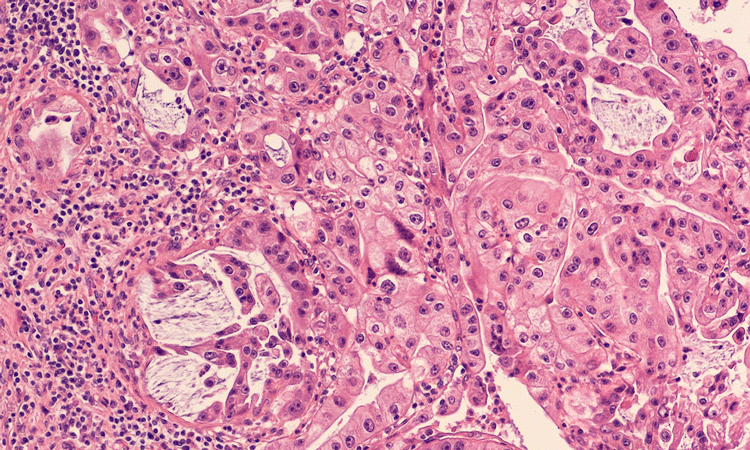
A team of researchers have revealed that aggressive pancreatic cancer cells use a molecule to change their environment, enabling metastasis. According to the researchers, the surroundings of tumours is a potential untapped resource for cancer therapy and one they intend to explore further.
…the team observed that non-metastatic cancers began to spread when combined with metastatic fibroblasts
The investigation, conducted by the Garvan Institute of Medical Research, Australia, compared metastatic and non-metastatic pancreatic cancers. The tissue is known as the ‘matrix’, similar to a glue that holds different cells in an organ or tumour together.
Using a mouse model, the researchers extracted fibroblasts from both types of tumours. Mixing these with the opposite cancer cells, the team observed that non-metastatic cancers began to spread when combined with metastatic fibroblasts.
Drug Target Review has just announced the launch of its NEW and EXCLUSIVE report examining the evolution of AI and informatics in drug discovery and development.
In this 63 page in-depth report, experts and researchers explore the key benefits of AI and informatics processes, reveal where the challenges lie for the implementation of AI and how they see the use of these technologies streamlining workflows in the future.
Also featured are exclusive interviews with leading scientists from AstraZeneca, Auransa, PolarisQB and Chalmers University of Technology.
“Our results suggest that some pancreatic cancer cells can ‘educate’ the fibroblasts in and around the tumour. This lets the fibroblasts remodel the matrix and interact with other, less aggressive cancer cells in a way that supports the cancer cells’ ability to spread,” said first author Dr Claire Vennin.
 The researchers used mass spectrometry techniques to further investigate the fibroblasts. They discovered several molecules from metastatic tumours that were produced at higher rates than in the non-metastatic tumours.
The team found that the metastatic pancreatic tumours produce more of a molecule called perlecan. Using gene editing techniques, the researchers reduced the levels of perlecan in mouse models of aggressive metastatic pancreatic cancer. Through advanced live imaging techniques, they tracked individual cancer cells and revealed that lowered perlecan decreased the spread of tumours which also then responded better to chemotherapy.
“If we can specifically target the aggressive fibroblasts in patients harbouring precise genetic changes, we can make them more susceptible to our currently approved treatments, which would significantly change how we treat this aggressive cancer,” said Dr Vennin.
“Most cancer therapies today aim to target cancer cells themselves. The environment of tumours is a potential untapped resource for cancer therapy and one which we intend to explore further,” said Associate Professor Paul Timpson, Head of the Invasion and Metastasis Laboratory at the Garvan Institute.
The findings were published in Nature Communications.
Related topics
Drug Targets, Oncology, Research & Development
Related conditions
Pancreatic cancer
Related organisations
Garvan Institute of Medical Research, Nature Communications
Related people
Associate Professor Paul Timpson, Dr Claire Vennin
