


Interferon pathway could provide drug target for cancers
Posted: 8 August 2019 | Victoria Rees (Drug Target Review) | No comments yet
A study has found that signals from interferons can be blocked, allowing the immune system to attack tumours which provides a potential target.
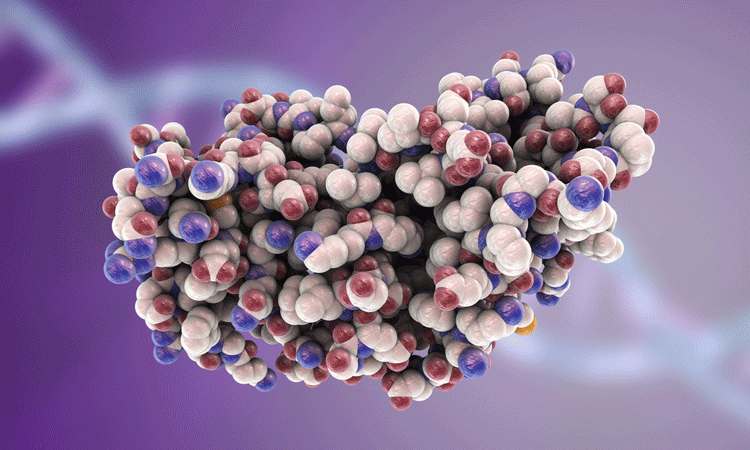
New research has discovered that a crucial signalling pathway which tells the immune system to combat tumours can also be used by cancer cells to inhibit the immune system. According to the researchers, the findings can be used to improve cancer therapies.
The research was conducted by the Abramson Cancer Centre at the University of Pennsylvania. The team investigated the interferon (IFN) signalling pathway, which usually helps activate the immune system to protect cells from viruses. However, IFNs can also block this system.
“This paradoxical effect has been seen in other diseases – such as chronic viral infections – but our study shows how cancer cells take advantage of the suppressive properties of IFNs to interfere with cancer immunotherapy,” said the study’s senior author Dr Andy Minn.
Drug Target Review has just announced the launch of its NEW and EXCLUSIVE report examining the evolution of AI and informatics in drug discovery and development.
In this 63 page in-depth report, experts and researchers explore the key benefits of AI and informatics processes, reveal where the challenges lie for the implementation of AI and how they see the use of these technologies streamlining workflows in the future.
Also featured are exclusive interviews with leading scientists from AstraZeneca, Auransa, PolarisQB and Chalmers University of Technology.
IFN signaling exists in the majority of human cancers, so this could end up applying more broadly
The researchers observed that when IFNs halt the immune system, cancer cells intercept and manipulate the process.
When the IFN signal is stronger in cancer cells, there could be a therapeutic solution. Blocking the signal from tumours would allow the immune system to attack the cancer. In pre-clinical models of melanoma, breast and colorectal cancer, the researchers found they were able to inhibit the signals.
“IFN signaling exists in the majority of human cancers, so this could end up applying more broadly,” Minn said.
The researchers say the next step is to identify methods of making IFN signals stronger for use in therapies.
The findings were published in Cell.
Related topics
Drug Targets, Oncology, Research & Development
Related conditions
Breast cancer, Cancer, Colorectal cancer, Melanoma
Related organisations
Abramson Cancer Centre, Cell, Pennsylvania University
Related people
Dr Andy Minn
