


Allergy-driving cells identified as potential drug targets
Posted: 2 August 2019 | Victoria Rees (Drug Target Review) | No comments yet
Researchers have discovered a subtype of immune cells that contribute to allergic reactions and anaphylaxis, providing a drug target.
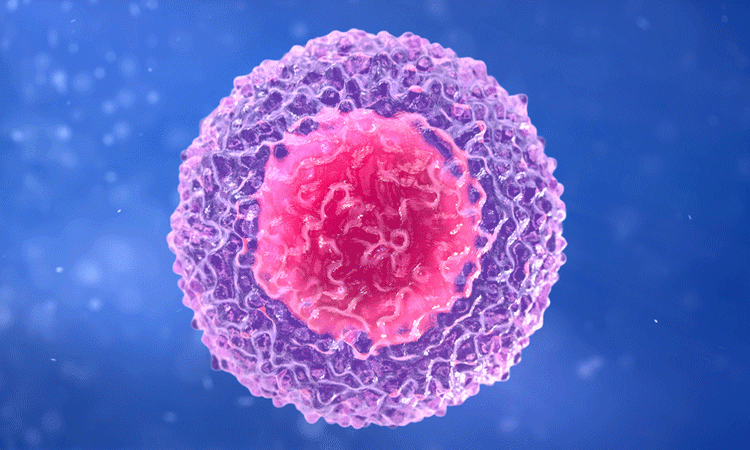
A new study has identified a subtype of immune cell that drives production of antibodies associated with anaphylaxis and other allergic reactions. The researchers say that the findings reveal a potential target for new therapies to prevent severe allergic reactions.
The research was conducted by Yale University and the Jackson Laboratory for Genomic Medicine, both Connecticut, along with their collaborators.
The scientists used mice bred to have a rare genetic immune disease called DOCK8 immunodeficiency syndrome. In humans, this can lead to severe allergies and asthma, among other conditions. They discovered a subtype of T cell, called T follicular help cell 13, or TFH13.
Drug Target Review has just announced the launch of its NEW and EXCLUSIVE report examining the evolution of AI and informatics in drug discovery and development.
In this 63 page in-depth report, experts and researchers explore the key benefits of AI and informatics processes, reveal where the challenges lie for the implementation of AI and how they see the use of these technologies streamlining workflows in the future.
Also featured are exclusive interviews with leading scientists from AstraZeneca, Auransa, PolarisQB and Chalmers University of Technology.
Previous studies have shown that allergies and anaphylaxis are linked to the production of high levels of high-affinity IgE antibodies, which bind strongly to allergens to spur reactions. Mice with DOCK8 deficiency were observed by the researchers to have novel T follicular helper cells not found in normal mice. These produced a unique combination of cytokines.
…targeting Tfh13 cells may represent a new strategy to prevent or treat allergic diseases
Taking mice with normal immune systems, the researchers sensitised them with respiratory and food allergens to induce severe allergic reactions leading to anaphylaxis. Non-allergic mice lacked Tfh13 cells, whereas allergic mice had both Tfh13 cells and high-affinity IgE.
With genetic manipulation, the team prevented Tfh13 cell development in mice and found that the animals did not make anaphylactic IgE in response to allergens. They then compared blood samples from patients with peanut or respiratory allergies to those of non-allergic volunteers and found that individuals with allergies and the associated IgE had elevated levels of Tfh13 cells.
The study authors conclude that Tfh13 cells are responsible for directing antibody-producing B cells to create high-affinity IgE and that Tfh13 cells may be required for allergic disease, including anaphylaxis. They say targeting Tfh13 cells may represent a new strategy to prevent or treat allergic diseases.
The findings were published in Science.
Related topics
Antibodies, Drug Targets, Research & Development
Related conditions
Allergies, Anaphylaxis
Related organisations
Jackson Laboratory for Genomic Medicine, Science., Yale University
