


New system enables improved pre-clinical testing of heart drugs
Posted: 26 July 2019 | Drug Target Review | No comments yet
Researchers have extended the life of heart segments from 24 hours to six days, enabling pre-clinical trials to experiment on these new models for longer periods of time.
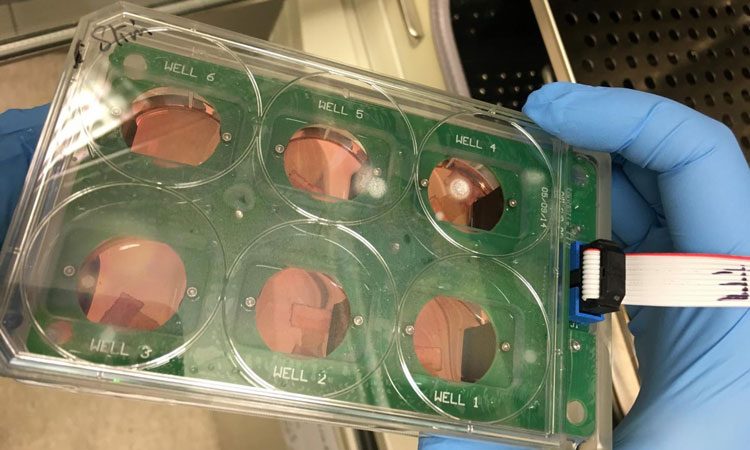
Heart slices in the physiological biomimetic culture system developed at UofL (credit: University of Louisville).
An easily reproducible system that enables scientists to keep slices of human hearts alive for longer has been developed, allowing more extensive testing of new drugs and gene therapies.
This new biomimetic culture system mimics the environment of a living organ through continuous electrical stimulation and oxygenation, maintaining viability and functionality of the heart segments for six days. As the previous timescale was no more than 24 hours, the developers say the extended time will enable improved pre-clinical testing of new drugs for effectiveness and toxicity.
“This new method maintains fully functional human heart slices for six days in the culture environment,” said Dr Tamer M A Mohamed, from the University of Louisville, who led the research. “This facilitates testing efficacy of heart failure therapeutics and cardiotoxins on human heart tissue with no need for a living human.”
Drug Target Review has just announced the launch of its NEW and EXCLUSIVE report examining the evolution of AI and informatics in drug discovery and development.
In this 63 page in-depth report, experts and researchers explore the key benefits of AI and informatics processes, reveal where the challenges lie for the implementation of AI and how they see the use of these technologies streamlining workflows in the future.
Also featured are exclusive interviews with leading scientists from AstraZeneca, Auransa, PolarisQB and Chalmers University of Technology.
The system provides access to the complete three-dimensional multicellular system that reflects the heart’s functional and structural condition in a living person.
“This system will save time and costs of clinical trials during Phase I research, which includes testing for toxicity and proof of efficacy,” Mohamed continued. “In addition to drugs, we have demonstrated the system’s effectiveness in testing gene therapy.”
The study, ‘A Physiological Biomimetic Culture System for Pig and Human Heart Slices’ was published online in Circulation Research, a publication of the American Heart Association.
Related topics
Clinical trials, Drug Development, Gene Therapy, Research & Development
Related organisations
American Heart Association, Circulation Research, University of Louisville
Related people
Tamer M A Mohamed PhD
