


Study finds fat cells play key role in melanoma metastasis
Posted: 24 July 2019 | Victoria Rees (Drug Target Review) | No comments yet
Researchers have found that fat cells transfer cytokines to melanoma cells, which transforms them into aggressive tumours, indicating a drug target for the condition.
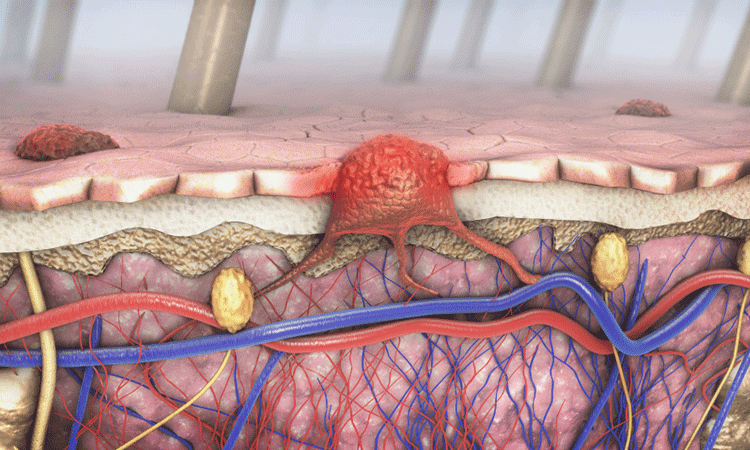
Fat cells are involved in the transformation of melanoma cells from cancer cells with limited growth to highly metastatic cells which attack the body, according to a new study. The researchers say that the findings can serve as a basis for developing novel drugs which halt the spread of melanoma.
The researchers, from Tel Aviv University, Israel, examined dozens of biopsy samples taken from melanoma patients at Wolfson Medical Center and Tel Aviv Medical Center, both Israel. They observed a mass of fat cells near tumour sites. Using a petri dish, the team placed fat cells and melanoma cells together to investigate their interactions.
They found the fat cells transferring cytokine proteins, which affect gene expression, to the melanoma cells.
Drug Target Review has just announced the launch of its NEW and EXCLUSIVE report examining the evolution of AI and informatics in drug discovery and development.
In this 63 page in-depth report, experts and researchers explore the key benefits of AI and informatics processes, reveal where the challenges lie for the implementation of AI and how they see the use of these technologies streamlining workflows in the future.
Also featured are exclusive interviews with leading scientists from AstraZeneca, Auransa, PolarisQB and Chalmers University of Technology.
The main impact of the cytokines was to reduce the expression of a gene called miRNA211, which inhibits the activity of a melanoma receptor of a protein in the skin called TGF beta. The tumour then absorbs a high concentration of TGF beta, stimulating the melanoma cells, which makes them aggressive.
By removing the fat cells from the melanoma, the team saw the cancer cells became less metastatic and stopped migration.
Using mouse models, the researchers discovered that when miRNA211 was repressed, metastases were found in other organs, but re-expression of the gene blocked metastases formation.
The researchers then utilised therapies that are known to inhibit these cytokines, but which have not been used to treat melanoma. These substances, currently in clinical trials, restrained the metastatic process and the melanoma returned to its usual state.
“Our findings can serve as a basis for the development of new drugs to halt the spread of melanoma; therapies that already exist, but were never used for this purpose,” said one of the lead authors, Professor Carmit Levy. “In the future, we are seeking to collaborate with drug companies to enhance the development of the metastatic melanoma prevention approach.”
The study was published in Science Signaling.
Related topics
Drug Targets, Oncology, Research & Development
Related organisations
Science Signaling, Tel Aviv University
Related people
Professor Carmit Levy
