


Method for radiolabelling antibodies against breast cancer developed
Posted: 25 April 2019 | Drug Target Review | 1 comment
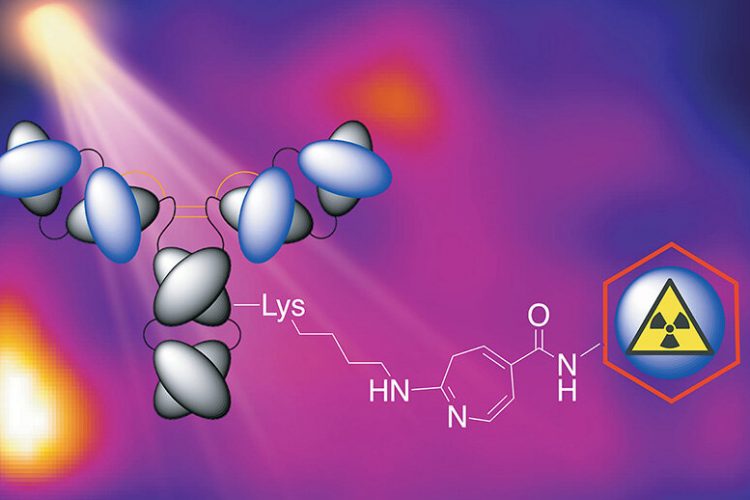
Researchers from the University of Zurich have created a new method for radiolabelling antibodies using UV light – with proteins being ready-to-use for cancer imaging or therapy in less than 15 minutes.
Credit: Jason P. Holland, UZH
Radioactive antibodies are used in nuclear medicine as imaging agents for positron emission tomography (PET) – an imaging technique that improves cancer diagnosis and monitoring chemotherapy. Radioactive drugs can also be designed to kill tumours by delivering a radioactive payload specifically to the cancer cells. This treatment is called targeted radioimmunotherapy.
Conventional methods for radiolabelling proteins are time-consuming and difficult to automate. This new method, developed by Jason P Holland, professor in the Department of Chemistry at the University of Zurich (UZH), uses UV light to synthesise radioactive drugs and diagnostic agents: “By combining photochemistry with radiochemistry, we are now able to make radiolabelled proteins much more quickly and easily,” Holland said.
The team produced a series of novel chemical compounds (chelates) that have two distinctive properties: First, they are able to bind radioactive metal ions like gallium, copper and zirconium. Second, the molecules have a special chemical group that becomes activated by shining UV light on the sample: “The UV light causes the small metal complex to react extremely quickly and efficiently with certain amino acids found in proteins like antibodies,” Holland added.
Drug Target Review has just announced the launch of its NEW and EXCLUSIVE report examining the evolution of AI and informatics in drug discovery and development.
In this 63 page in-depth report, experts and researchers explore the key benefits of AI and informatics processes, reveal where the challenges lie for the implementation of AI and how they see the use of these technologies streamlining workflows in the future.
Also featured are exclusive interviews with leading scientists from AstraZeneca, Auransa, PolarisQB and Chalmers University of Technology.
They were also able to establish a one-pot process to radiolabel trastuzumab, an antibody used to treat patients with breast cancer, with gallium in less than 20 minutes: “The efficient one-pot route has the unique advantage of avoiding the need to isolate and characterise the conjugated intermediate antibody. And the process can be fully automated,” Holland explained further.
Time is one of a huge challenges in radiotracer design for PET imaging since gallium decays rapidly, The research team further developed their method using zirconium to radiolabel trastuzumab. They managed to synthesise the radiolabelled breast cancer antibody in high yield and purity in less than 15 minutes.
With mice bearing human cancer cells that are targeted by trastuzumab, they showed that for PET imaging the zirconium-labelled antibody worked as well as those produced via established methods.
Holland has submitted a patent application for the new procedure and aims to develop the technology along commercial lines. The researchers are also expanding the technology for use against other cancers.
Related topics
Antibodies, Imaging, Oncology
Related conditions
Breast cancer
Related organisations
University of Zurich (UZH), Zurich University
Related people
Jason P Holland

This site truly has all the information I wanted about this subject and didn’t know who to ask.