


Study shows role IgM antibodies play in preventing thrombosis
Posted: 10 March 2021 | Victoria Rees (Drug Target Review) | No comments yet
A new study has revealed that immunoglobulin-M antibodies recognise microvesicles, which are critical for the progression of thrombosis.
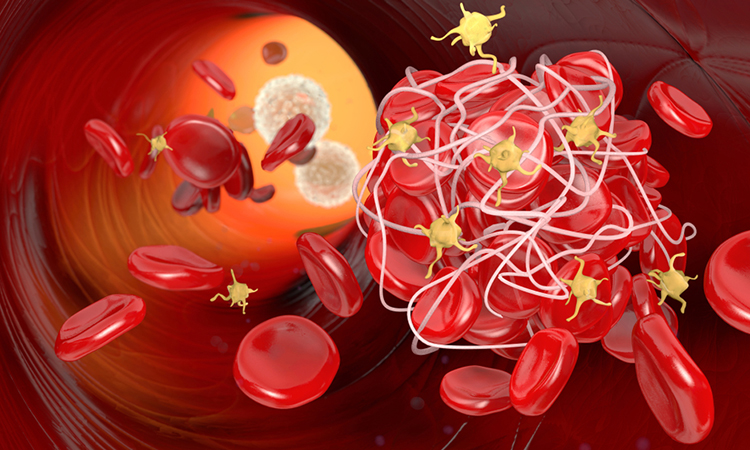
A new study has revealed the important role of immunoglobulin-M (IgM) antibodies in preventing thrombosis. The researchers, from the CeMM Research Center for Molecular Medicine of the Austrian Academy of Sciences and the Medical University of Vienna, both Austria, say that these antibodies recognise microvesicles, which are membrane blebs shed by cells and recognised for their critical role in thrombosis, so therefore prevent pro-thrombotic effects.
According to the authors, earlier studies have demonstrated that people with a low number of IgM antibodies have an increased risk for thrombosis. The team also previously demonstrated that a high percentage of natural IgM antibodies bind oxidation-specific epitopes, molecular structures that are present on dying cells and serve as signals for the immune system.
In the new study, the researchers identified the mechanisms explaining the anti-thrombotic effects of natural IgM antibodies. They demonstrated that the antibodies that bind oxidation-specific epitopes can prevent coagulation and thrombosis induced by microvesicles. This provides a mechanistic explanation for the previously published observation that low levels of these antibodies are associated with an increased risk of thrombosis.
Drug Target Review has just announced the launch of its NEW and EXCLUSIVE report examining the evolution of AI and informatics in drug discovery and development.
In this 63 page in-depth report, experts and researchers explore the key benefits of AI and informatics processes, reveal where the challenges lie for the implementation of AI and how they see the use of these technologies streamlining workflows in the future.
Also featured are exclusive interviews with leading scientists from AstraZeneca, Auransa, PolarisQB and Chalmers University of Technology.
“We assume that natural IgM antibodies recognise microvesicles that are particularly pro-inflammatory and pro-coagulant,” say the scientists in their paper.
In experiments on a mouse model and directly on human blood samples, the scientists were able to show that the addition of IgM antibodies inhibited blood clotting caused by specific microvesicles and protected mice from lung thrombosis. Conversely, it was also shown that depletion of the IgM antibodies increased blood clotting.
“The study for the first time provides an explanation why people with a low number of natural IgM antibodies have an increased risk of thrombosis,” write the authors.
“The results offer high potential for novel treatments to reduce the risk of thrombosis. Influencing IgM antibody levels in high-risk patients could be a viable addition to the previously established blood thinning treatment, as this is also known to be associated with side effects such as an increased tendency to bleed in the case of injuries,” said principal investigator Professor Christoph Binder. “Microvesicles are already recognised as an important component of blood coagulation. However, our study created a novel possibility of targeting them therapeutically for the first time.”
The study was published in Blood.
Related topics
Antibodies, Disease research, Protein, Proteomics
Related conditions
thrombosis
Related organisations
CeMM Research Center for Molecular Medicine of the Austrian Academy of Sciences, Medical University of Vienna
Related people
Professor Christoph Binder
