


PLpro inhibitors support immune response to COVID-19 in cell cultures
Posted: 30 July 2020 | Victoria Rees (Drug Target Review) | No comments yet
Researchers have found that using GRL-0617, an PLpro inhibitor, in cell cultures blocked SARS-CoV-2 production and supported the cell immune response.
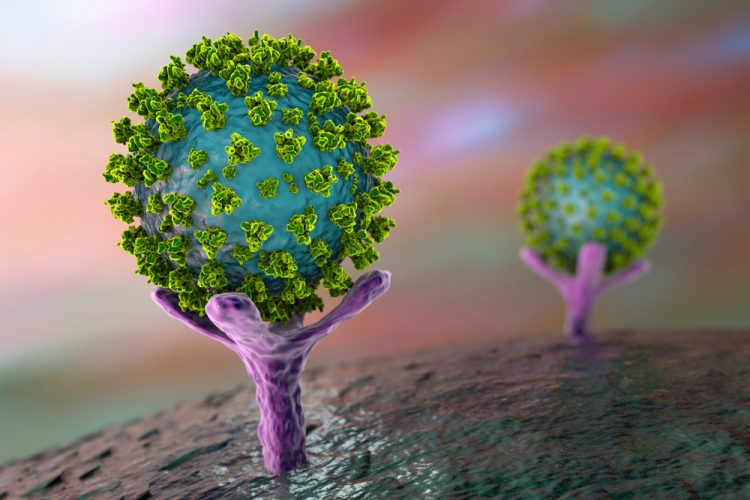
Researchers have monitored the processes that SARS-CoV-2, the virus causing the COVID-19 pandemic, uses to infect human cells in cell culture experiments. From University Hospital Frankfurt, Germany, the team discovered that papain-like protease (PLpro) inhibitors could work as effective therapies against COVID-19.
With regular news updates and feature articles, our COVID-19 hub has everything you need to keep up to date with R&D during the pandemic. Click below to visit:
The researchers say that in the case of an infection, SARS-CoV-2 must overcome various defence mechanisms of the human body, including its non-specific or innate immune defence. During this process, infected body cells release messenger substances known as type 1 interferons. These attract natural killer cells, which kill the infected cells.
One of the reasons the SARS-CoV-2 virus is so successful – and thus dangerous – is that it can suppress the non-specific immune response, the scientists say. In addition, it lets the human cell produce the viral protein PLpro (papain-like protease). PLpro has two functions: it plays a role in the maturation and release of new viral particles and it suppresses the development of type 1 interferons.
Drug Target Review has just announced the launch of its NEW and EXCLUSIVE report examining the evolution of AI and informatics in drug discovery and development.
In this 63 page in-depth report, experts and researchers explore the key benefits of AI and informatics processes, reveal where the challenges lie for the implementation of AI and how they see the use of these technologies streamlining workflows in the future.
Also featured are exclusive interviews with leading scientists from AstraZeneca, Auransa, PolarisQB and Chalmers University of Technology.
The researchers then found that when they blocked PLpro, virus production was inhibited and the innate immune response of the human cells was strengthened at the same time.
Professor Ivan Dikic, Director of the Institute of Biochemistry II at University Hospital Frankfurt and last author of the paper, explained: “We used the compound GRL-0617, a non-covalent inhibitor of PLpro, and examined its mode of action very closely in terms of biochemistry, structure and function. We concluded that inhibiting PLpro is a very promising double-hit therapeutic strategy against COVID-19. The further development of PLpro-inhibiting substance classes for use in clinical trials is now a key challenge for this therapeutic approach.”
Another finding from this work is that the viral protein PLpro of SARS-CoV-2 cleaves off interferon-stimulated gene 15 (ISG-15) from cellular proteins with a higher level of activity than the severe acute respiratory syndrome (SARS) equivalent, which leads to greater inhibition of type I interferon production. This is concordant with recent clinical observations which show that COVID-19 exhibits a reduced interferon response in comparison to other respiratory viruses such as influenza and SARS.
Professor Sandra Ciesek, Director of the Institute of Medical Virology at University Hospital Frankfurt, explained that PLpro is an extremely attractive antiviral goal because its inhibition would be a “double strike” against SARS-CoV-2, preventing viral replication and strengthening the human immune response.
The results were published in Nature.
Related topics
Drug Development, Drug Discovery, Drug Targets, Immunotherapy, Research & Development, Target molecule, Targets, Therapeutics
Related conditions
Coronavirus, Covid-19
Related organisations
University Hospital Frankfurt
Related people
Professor Ivan Dikic, Professor Sandra Ciesek
