


news
Charles River Laboratories continues commitment to oncology drug discovery
Team of oncology experts expand data in Tumor Model Compendium and present strong portfolio at industry conferences...
List view / Grid view
Team of oncology experts expand data in Tumor Model Compendium and present strong portfolio at industry conferences...
9 November 2018 | By Beckman Coulter
In this webinar you learn about a high throughput screening approach for mining of antibody repertoires in the context of biologics drug discovery.
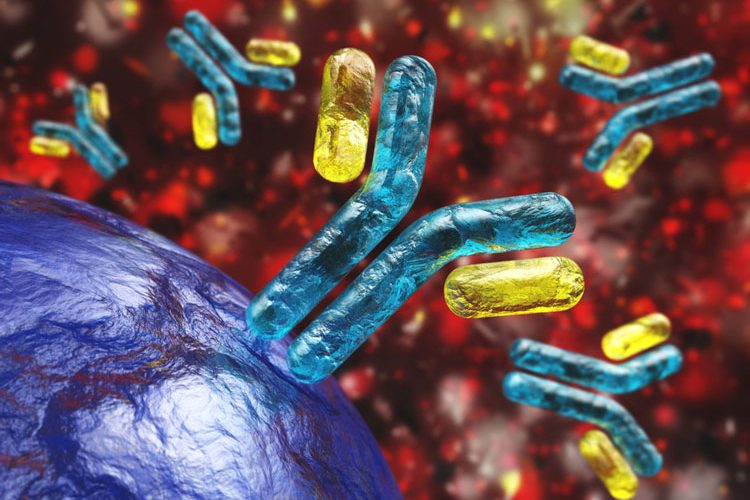
Investigational therapeutic candidate made with four antibodies tethered together shows promise against influenza A and B...

Charles River Laboratories International, Inc. announced that it has entered into an exclusive partnership with Distributed Bio, Inc., a leader in the computational design and optimisation of antibody discovery platforms...
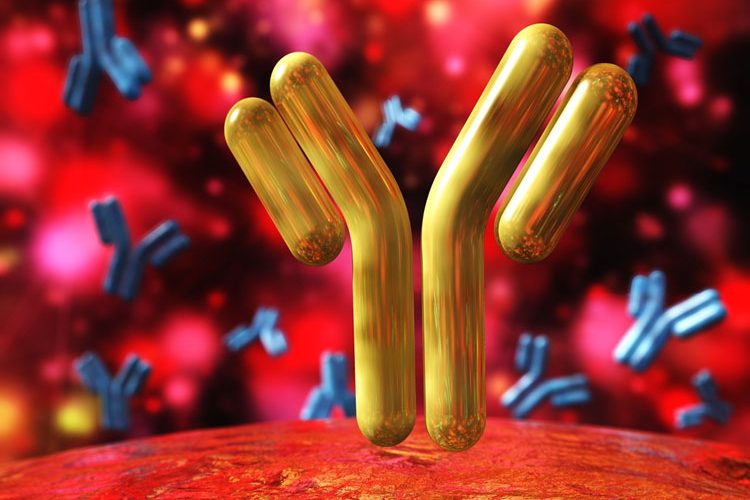
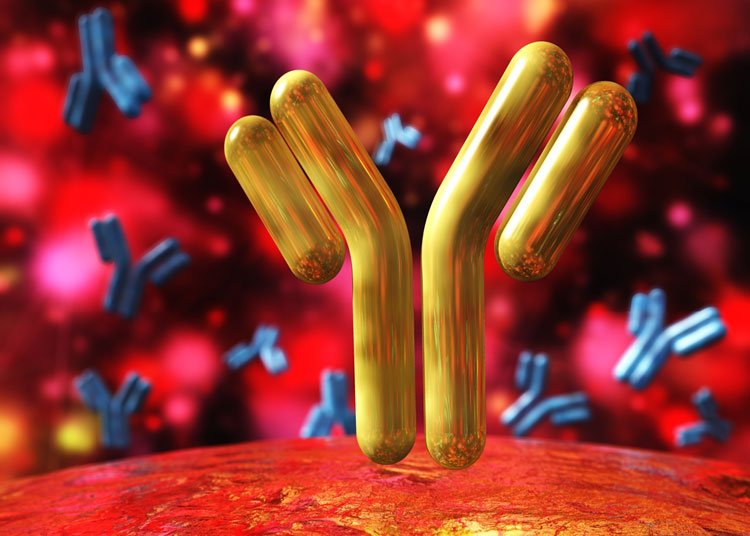
Levels of antiphospholipid antibodies, which are associated with rheumatic diseases, are also elevated in myocardial infarction without any autoimmune co-morbidity...

Drug delivery through the blood-brain barrier has shown to be difficult to overcome, but researchers may have discovered a method to overcome this issue...
ELRIG’s (European Laboratory Research & Innovation Group) Drug Discovery meeting, will take place at ExCeL, London, UK, located in the heart of the city, from 9 -10 October 2018...

Flow cytometry has become a widely used technology in life science research since its development in the 1970s. It is also essential for many biopharmaceutical and biotechnology companies due to its proficiency in identifying biomarkers, finding new inhibitory antibodies, and assessing the efficiency of new pharmacological protocols.


Developing an HIV vaccine focuses on discovering the factors responsible for the production of antibodies that neutralise almost all known virus strains...

Explore the full kinetic and epitope diversity of large antibody libraries with high throughput Array SPR (Surface Plasmon Resonance).

Biologics are the fastest growing class of therapeutics in the biopharmaceutical industry. A key driver for this growth is success with anti-cancer immunotherapeutics such as checkpoint modulation, adoptive cell therapy and bispecific T-cell engagers. While these approaches use different tactics to attack tumours, they often employ monoclonal antibodies to target…
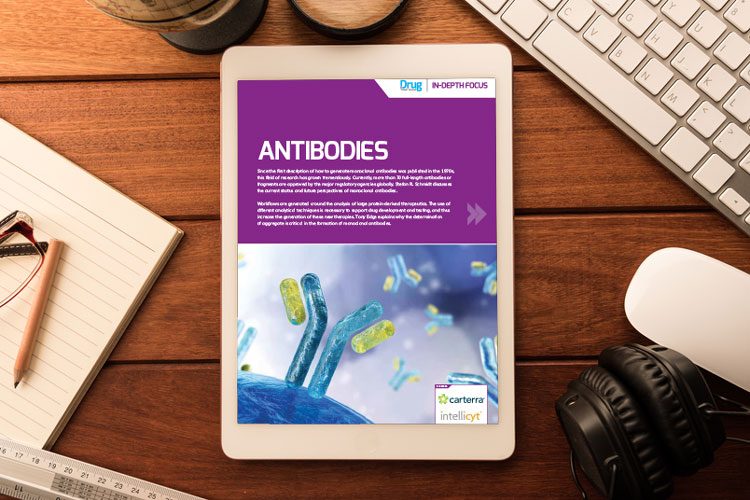
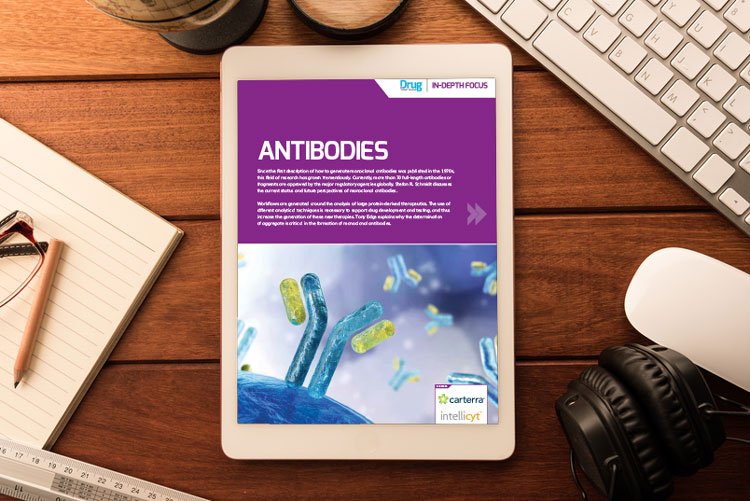
In this In-Depth Focus, Stefan R. Schmidt discusses the current status and future perspectives of monoclonal antibodies and Tony Edge explains why the determination of aggregate is critical in the formation of monoclonal antibodies.

Growing evidence reveals that using single immunotherapies to treat oncological disorders may lead to cancer-killing T-cell overdrive,initiating life-threatening autoimmune reactions including cytokinestorm; also known as hypercytokinemia or Cytokine Release Syndrome(CRS). Recently, checkpoint blockade using anti-programmed cell death1 (anti-PD-1) inhibitors became a prevalent approach for stimulatinganti-tumour immune system.
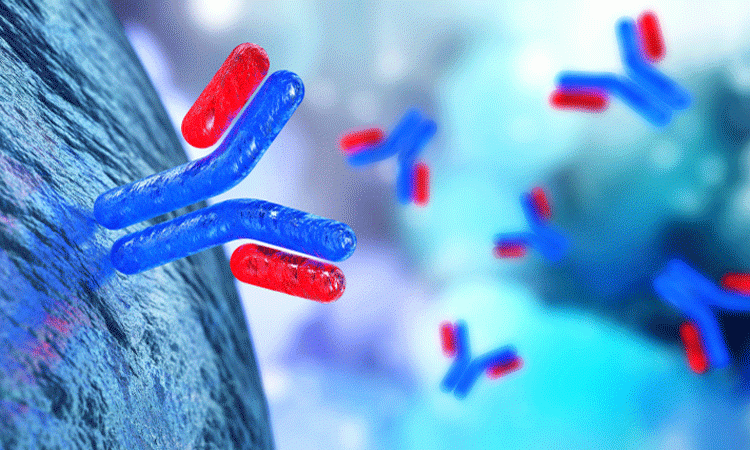
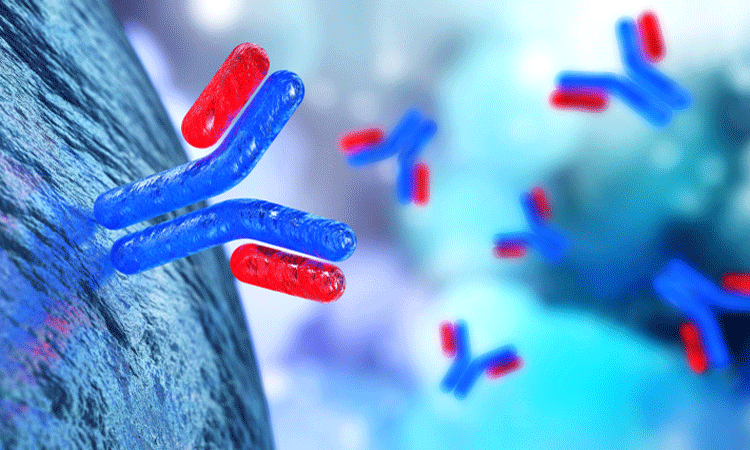
Workflows are generated around the analysis of large protein-derived therapeutics. The use of different analytical techniques is necessary to support drug development and testing, and thus increase generation of these new therapies. One of the areas that is most critical to this process is the determination of aggregates.


Researchers have discovered that the activation of brain cells contributes to the memory loss and other cognitive impairments suffered by many patients with systemic lupus erythematosus...
