

First European nanomedicine characterisation laboratory launches
Posted: 1 July 2015 | Victoria White
A European Nano-Characterisation Laboratory has launched with the aim of reaching a level of international excellence in nanomedicine characterisation…
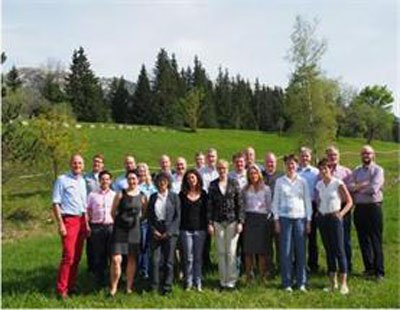
EU-NCL team during kick-off meeting
CEA-Leti today announced the launch of the European Nano-Characterisation Laboratory (EU-NCL) funded by the European Union’s Horizon 2020 research and innovation programme.
Its main objective is to reach a level of international excellence in nanomedicine characterisation for medical indications like cancer, diabetes, inflammatory diseases or infections, and make it accessible to all organisations developing candidate nanomedicines prior to their submission to regulatory agencies to get the approval for clinical trials and, later, marketing authorisation.
Nano-characterisation is a bottleneck encountered by companies developing nanomedicine
“…there is a lack of infrastructure to support nanotechnology-based innovation in healthcare,” said Patrick Boisseau, head of business development in nanomedicine at CEA-Leti and chairman of the European Technology Platform Nanomedicine (ETPN). “Nano-characterisation is the first bottleneck encountered by companies developing nanotherapeutics. The EU-NCL project is of most importance for the nanomedicine community, as it will contribute to the competiveness of nanomedicine products and tools and facilitate regulation in Europe.”
Drug Target Review has just announced the launch of its NEW and EXCLUSIVE report examining the evolution of AI and informatics in drug discovery and development.
In this 63 page in-depth report, experts and researchers explore the key benefits of AI and informatics processes, reveal where the challenges lie for the implementation of AI and how they see the use of these technologies streamlining workflows in the future.
Also featured are exclusive interviews with leading scientists from AstraZeneca, Auransa, PolarisQB and Chalmers University of Technology.
EU-NCL is partnered with the sole international reference facility, the Nanotechnology Characterisation Lab of the National Cancer Institute in the US (US-NCL), to get faster international harmonisation of analytical protocols.
“We are excited to be part of this cooperative arrangement between Europe and the US,” said Scott E. McNeil, director of US-NCL. “We hope this collaboration will help standardise regulatory requirements for clinical evaluation and marketing of nanomedicines internationally. This venture holds great promise for using nanotechnologies to overcome cancer and other major diseases around the world.”
EU-NCL is also closely connected to national medicine agencies and the European Medicines Agency to continuously adapt its analytical services to requests of regulators. EU-NCL is designed, organised and operated according to the highest EU regulatory and quality standards.
EU-NCL will develop new assays to keep it at the cutting edge of nanomedicine characterisation
This project is important for Europe, as it will be the first transnational infrastructure in nanomedicine. It aims at fostering innovation by sharing knowledge and technologies between academia and industry.
The mission of EU-NCL is:
- To provide a trans-disciplinary testing infrastructure covering a comprehensive set of preclinical characterisation assays (physical, chemical, in-vitro and in-vivo biological testing), allowing researchers to fully comprehend the biodistribution, metabolism, pharmacokinetics, safety profiles and immunological effects of their medicinal nano-products.
- To foster the use and deployment of standard operating procedures (SOPs), benchmark materials and quality management for the preclinical characterisation of medicinal nano-products.
- To promote intersectoral and interdisciplinary communication among key drivers of innovation, especially between developers and regulatory agencies.
Within EU-NCL, six analytical facilities will offer transnational access to their existing analytical services for public and private developers, and will also develop new or improved analytical assays to keep EU-NCL at the cutting edge of nanomedicine characterisation.
EU-NCL is funded by the European Commission for a four-year period, with nearly 5 million euros allocated.
